
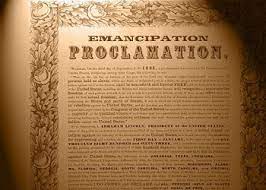
As the nation entered a new year on January 1, 1863, the echoes of change reverberated across the United States with the issuance of the Emancipation Proclamation by President Abraham Lincoln. This historic decree marked a turning point in American history, signaling the end of legal slavery and laying the groundwork for a more just and equitable society.
The Context of the Civil War: At the heart of the Civil War, President Lincoln faced the monumental challenge of preserving the Union while addressing the divisive issue of slavery. As the conflict unfolded, the moral imperative to end the institution of slavery became increasingly evident.
The Emancipation Proclamation Unveiled: On January 1, 1863, President Lincoln issued the Emancipation Proclamation, a proclamation declaring “that all persons held as slaves” within the Confederate states “are, and henceforward shall be free.” While the proclamation did not immediately free all enslaved individuals, it marked a crucial step toward the abolition of slavery.
Military and Moral Significance: The Emancipation Proclamation held dual significance—it served as both a strategic wartime measure and a moral imperative. By declaring enslaved individuals in Confederate-held territories free, it sought to weaken the Southern war effort and encourage enslaved people to seek freedom behind Union lines.
Impact and Challenges: The proclamation fundamentally altered the nature of the Civil War, transforming it into a struggle not only for Union preservation but also for the emancipation of those held in bondage. However, its impact faced challenges as it required military success to enforce, and its jurisdiction did not cover slave-holding border states loyal to the Union.
The Road to the 13th Amendment: While the Emancipation Proclamation marked a significant milestone, the journey toward complete abolition continued. It laid the groundwork for the eventual ratification of the 13th Amendment to the Constitution in 1865, officially abolishing slavery in the United States.
Legacy of Freedom: The Emancipation Proclamation left an enduring legacy, symbolizing the nation’s commitment to freedom and equality. Its issuance signaled a moral imperative that went beyond the immediate exigencies of war, shaping the trajectory of the United States towards a more inclusive future.
Conclusion: On this January 1, 2024, we reflect on the Emancipation Proclamation as a beacon of hope and a catalyst for change. While the journey towards equality continued long after its issuance, the proclamation remains a testament to the resilience of a nation striving to live up to its ideals. Happy New Years America, Happy New Years to all.