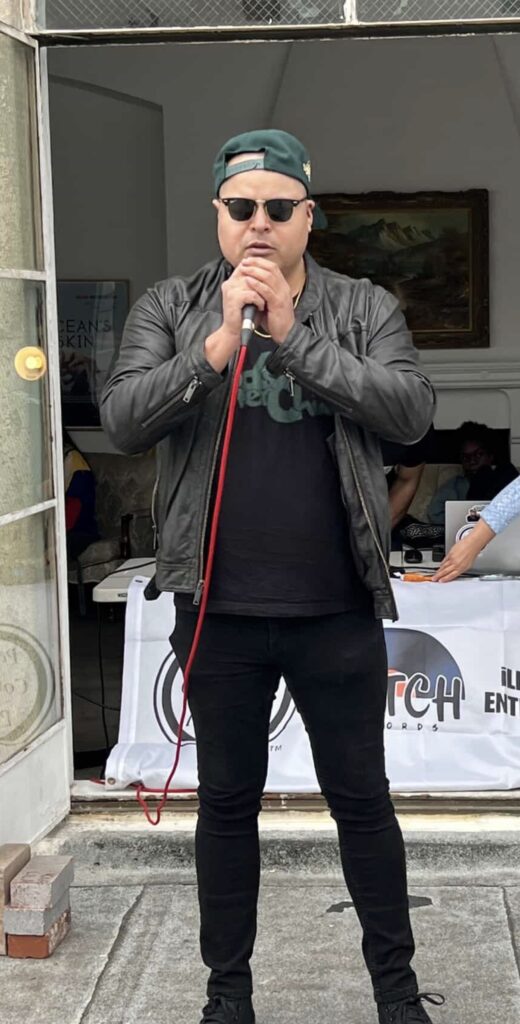
*GOD’S TIMELINE EPISODE 002: From ChatGPT’s Water Consumption to GTA Memories and Marshawn Lynch’s Money Strategy
The internet remains undefeated.
Episode 002 of *God’s Timeline took viewers on another trip through the endless chaos, curiosity, comedy, controversy, and conversation that make up the modern timeline. Hosted by *God’sPosterChild, the episode jumped between breaking news, gaming nostalgia, financial wisdom, internet rabbit holes, celebrity headlines, life lessons, and everything in between.
As always, there was no script.
Just the timeline.
ChatGPT Drinks Water?
One of the strangest discussions of the episode centered around reports that AI-generated content consumes real-world resources, including water used in data center cooling systems.
The realization sparked an unexpected comparison between ChatGPT’s hydration habits and humanity’s own daily water consumption, proving once again that the internet can make even infrastructure discussions entertaining.
Marshawn Lynch and the Million-Dollar Lesson
Former NFL star Marshawn Lynch became one of the most discussed figures of the episode after reports resurfaced about his financial discipline during his playing career.
The conversation quickly shifted from football to wealth building, saving money, and the difference between earning income and actually keeping it.
For many viewers, it served as a reminder that financial success is often more about discipline than income.
The Lost Art of GTA Online
Gaming nostalgia returned in a major way.
From reminiscing about mechanics physically delivering vehicles in GTA Online to memories of stealing military fighter jets from heavily guarded bases, Episode 002 highlighted how certain gaming moments become shared cultural experiences.
The comments section quickly proved one thing:
Veteran GTA players never forget.
Halo, Subscriptions, and Modern Gaming Frustrations
A story involving a father attempting to play Halo campaign co-op with his son opened a larger discussion about the state of modern gaming.
What was once as simple as buying a game and playing together has increasingly become a maze of subscriptions, accounts, and additional purchases.
The conversation struck a nerve with gamers who remember a much simpler era.
Wisdom Hidden in Plain Sight
One of the most impactful moments of the episode came from a simple observation:
“A fool prays for an easier road. A wise man prays for stronger legs.”
The quote sparked a broader discussion about adversity, growth, and personal development. Rather than avoiding life’s obstacles, the conversation focused on becoming stronger through them.
It quickly became one of the most memorable moments from Episode 002.
The Pool Paradox
Inspired by comments from actor Hiroyuki Sanada, the episode explored one of the strangest contradictions of human nature:
People often spend years dreaming about something they barely use once they finally get it.
Swimming pools, luxury purchases, hobbies, memberships, and countless other examples became evidence that sometimes we desire the idea of something more than the thing itself.
WWE, The Godfather, and Cultural Giants
Episode 002 also took time to reflect on the entertainment phenomena that once dominated popular culture.
From WWE’s explosive popularity during its peak years to the lasting influence of The Godfather, the discussion explored what separates good entertainment from true cultural landmarks.
Decades later, people still debate these topics—and that alone says something.
Internet Mysteries, Celebrity News, and Everything Else
As expected, the timeline delivered no shortage of strange stories:
- Celebrity family drama
- Conspiracy theories and deleted posts
- International political discussions
- Universal Studios horror attractions
- Massive tree-cutting machines
- LEGO supercars
- Pokémon misconceptions
- And more
No topic was safe.
No rabbit hole was too deep.
Final Thoughts
The timeline never sleeps.
One minute you’re talking about ChatGPT’s water consumption.
The next you’re debating whether Marshawn Lynch accidentally discovered the greatest wealth-building strategy in sports history.
Then somehow you’re reminiscing about GTA mechanics, questioning modern gaming subscriptions, discussing WWE’s peak popularity, learning about human psychology, and wondering how a LEGO supercar survives around children.
That’s the internet.
Messy.
Random.
Hilarious.
Interesting.
And sometimes, surprisingly insightful.
Episode 002 wasn’t about finding a single story.
It was about documenting the timeline exactly as it appeared on June 20, 2026.
Twenty-four hours of headlines, opinions, nostalgia, questions, arguments, wisdom, and absolute nonsense.
The timeline has spoken.
We’ll see what it says tomorrow.
Documented.
Timestamp it.
As it is written.
LIVE IN THE HILLS – EXTENDED VERSION
Los Angeles has always had rumors attached to it.
Rumors about hidden parties in the hills.
Rumors about artists disappearing into the industry machine.
Rumors about strange lights floating over late-night mansion gatherings while helicopters circle overhead pretending not to notice.
But LIVE IN THE HILLS didn’t feel like a rumor.
It felt documented.
Brought to life by Underground Hype Events, the private Hollywood Hills gathering became something far larger than a traditional showcase. What started as an underground mansion performance event slowly evolved into an immersive cinematic experience blending live music, horror aesthetics, surveillance-inspired visuals, and alien-abduction mythology into one long-form “classified tape” from Los Angeles nightlife.
By the end of the night, guests weren’t just talking about performances — they were talking about glitches in recordings, unexplained lights in the skyline, corrupted footage, and moments that genuinely felt… off.
And that was before the UFOs appeared in the archive.
Presented through the lens of recovered VHS-style footage edited and assembled by *God’sPosterChild, LIVE IN THE HILLS transformed ordinary concert documentation into something closer to recovered evidence.
The footage itself plays like a classified file.
Camcorder timestamps.
TOP SECRET overlays.
REC indicators.
Signal distortion.
Recovered archive warnings.
At times the visuals resemble old government tapes leaked decades after being buried. At others, the event feels like a modern reinterpretation of The X-Files mixed with Hollywood party culture and underground rap.
And somehow…
it works.
Throughout the night, artists cycled through performances while aerial anomalies quietly lurked above the skyline in the background of shots — UFOs replacing helicopters, unidentified craft watching from a distance, strange lights interrupting the atmosphere of the mansion itself.
The result wasn’t just a concert recap.
It became worldbuilding.
LIVE IN THE HILLS understood something most underground events miss entirely: atmosphere matters just as much as performance. Underground Hype Events created the environment, while the recovered-footage presentation elevated the experience into something cinematic and unsettling.
You weren’t just watching artists perform.
You were watching a classified incident unfold in real time.
From smoke-break “government warning” interstitials to eerie transition cards and recovered-footage title sequences, every creative decision reinforced the same central idea:
Something strange happened in those hills.
And the tape survived.
FEATURED ARTISTS:
@godsposterchild
@rektupmusic
@gspvrks
@kobe__800
@ninodon_200
@painting_bigger_pictures
@officialjrgrego
@afrikaashanti
@jayyboutabag
@jezzymanwins
@kushkiing
@mattswisherr
@wally_duzit
@jjaayyrriicchh
VISUALS / AUX FILES:
@domvincicode
@nick.p_auxfiles
@dreill_the_rapper
MADE POSSIBLE BY:
@ayo_dannyboy
@j3ezus
@dj_ricardox
@prophecytherapper
EVENT BY:
UNDERGROUND HYPE EVENTS
EDITS BY:
CHARGEIT2THAGAME
Watch the footage below and you be the judge:
SOPHIA DAO — Handmade Chaos
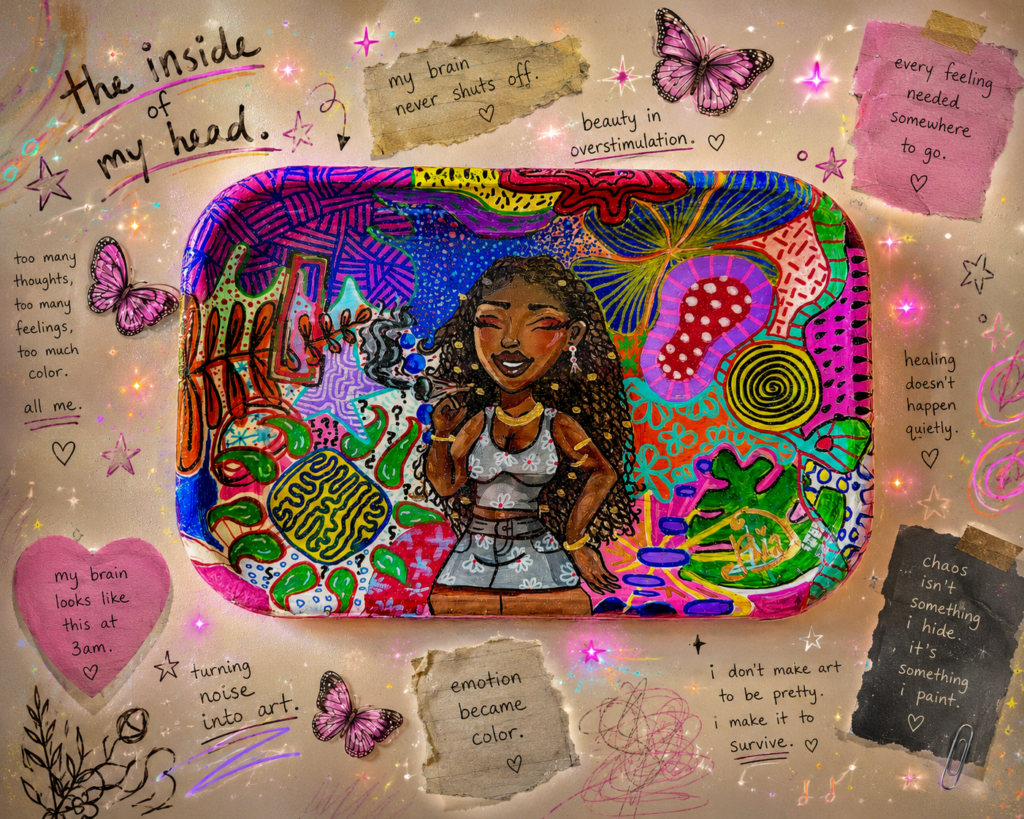
Somewhere between functional art and emotional overstimulation, PHIA’s handmade pieces feel less like accessories and more like fragments pulled directly out of her inner world.
Read more about SOPHIA DAO: Sophia Dao Is Building Worlds Out Of Emotion
Watch below.
SOPHIA DAO — Soft Things Become Armor
Reconstructed textures, feminine transformation, and wearable emotion.
SOPHIA DAO turns comfort into identity through handmade fashion pieces that feel deeply personal, surreal, and alive.
Read more about SOPHIA DAO: Sophia Dao Is Building Worlds Out Of Emotion
Watch below.
PHIA — “CATWOMAN”
PHIA’s music rarely feels overly explained.
It feels observed.
“CATWOMAN” leans deeper into the mysterious side of her artistry — feminine, emotionally self-aware, slightly detached, and fully immersed inside her own mischievous atmosphere.
Read more about PHIA: PHIA Sounds Like The Internet Fell In Love Again
Watch below.
PHIA — “WYA?”
Some songs don’t sound performed.
They sound emotionally leaked.
“WYA?” feels like late-night overthinking translated into atmosphere — soft, distant, vulnerable, and emotionally suspended somewhere between wanting clarity and already knowing the answer.
Read more about PHIA: PHIA Sounds Like The Internet Fell In Love Again
Watch below.
HOODWINGS (The Hollywood Song)
Promo Snippet to ‘HOODWINGS (The Hollywood Song)’ by Genesis Olivos, released by Record Records.
THE CREATIVE PARADOX
By Genesis Olivos
The Writer’s Room by DOCUMENTED
There’s a sentence I’ve been sitting with for a while now that keeps clawing its way back into my head every time I watch culture move in real time:
Women may actually be the true creatives of humanity.
Men may simply be the builders.
Not “better humans.”
Not “smarter.”
Not “more important.”
Something arguably far more dangerous.
More imaginative.
And if that idea irritates you immediately, good. Sit with it. The best thoughts usually arrive dressed like insults before revealing themselves as mirrors.
Because when I look at the world honestly — not politically, not emotionally, not ideologically — but observationally, I keep noticing something strange:
Men historically dominate systems.
Women historically dominate aesthetics.
Men construct empires.
Women define what those empires eventually look like.
Men industrialize.
Women humanize.
Men tend to obsess over function.
Women tend to obsess over feeling.
And culture, despite what people think, is not built on function.
It’s built on feeling.
That’s why entire civilizations can collapse economically while still producing incredible music, fashion, poetry, films, literature, and movements. Humans will lose food, money, homes, and governments before they lose the desire to create meaning around themselves.
And women — whether society admits it or not — have always been disproportionately tied to the emotional architecture of civilization.
Not just motherhood. That’s too simplistic.
I mean symbolism.
Texture.
Tone.
Mood.
Beauty.
Subtext.
Emotional memory.
Social rhythm.
Narrative gravity.
The invisible things.
The things that don’t appear on spreadsheets but somehow determine whether entire generations feel alive or dead inside.
That matters more than most historians admit.
Because history is often written by men obsessed with documenting conquest while quietly standing on top of emotional ecosystems largely cultivated by women.
And that raises a terrifying possibility:
What if women are not becoming more creative now…
What if they were always creative at this level…
…but civilization structurally compressed, redirected, ignored, or domesticated that creativity for thousands of years?
Because suppression does not erase energy.
It stores it.
Pressure creates explosions.
And if that’s true, then what we may be witnessing in modern society is not “new” female creativity at all.
It may be the uncorking of a civilization-sized bottle that’s been shaken violently for millennia.
Think about it carefully.
How many female painters never got to paint?
How many writers never got published?
How many composers were ignored?
How many inventors were overshadowed?
How many thinkers had their ideas attributed elsewhere?
How many women were reduced to “muses” while standing right next to the artist they inspired?
History has a strange habit of letting women decorate greatness while denying they helped architect it.
And before insecure men start panicking, let me say something equally important:
Men are still overwhelmingly responsible for building the infrastructure of civilization itself.
Roads.
Bridges.
Architecture.
Power grids.
Military systems.
Industrial expansion.
Mass-scale engineering.
Physical risk-taking.
Men historically specialize in external conquest. Women historically specialize in internal evolution.
One shapes the world outwardly.
The other shapes humanity inwardly.
The problem is that modern society keeps trying to force these observations into a stupid competition instead of recognizing them as potentially complementary evolutionary roles.
Everything now has to become:
“Who’s superior?”
That’s low-level thinking.
The real question is:
What happens when suppressed evolutionary potential finally reaches oxygen?
Because humans misunderstand evolution.
People imagine evolution as dramatic mutations happening overnight. But culturally? Socially? Creatively?
Evolution often looks like access.
That’s it.
Access changes everything.
The second large populations gain access to education, tools, distribution, audiences, capital, mobility, protection, and visibility — hidden talent floods outward almost immediately.
And the internet accelerated that process beyond anything humanity has ever experienced before.
Now suddenly millions of women can create without asking permission from publishers, labels, executives, studios, husbands, fathers, institutions, or gatekeepers.
That changes the evolutionary equation completely.
For the first time in human history, creativity itself is becoming decentralized.
And honestly?
The results have been fascinating.
Women dominate entire sections of modern aesthetic culture right now:
Fashion.
Beauty.
Lifestyle branding.
Social emotional marketing.
Visual identity trends.
Influencer economies.
Community engagement.
Consumer psychology.
Personal storytelling.
Even many male creators unknowingly build content ecosystems around emotional principles women mastered generations ago.
Men often think they’re selling products.
Women understand they’re selling atmosphere.
That distinction is enormous.
Atmosphere controls culture.
And yet there’s another uncomfortable truth hiding underneath all this:
Men still statistically dominate the highest extremes of singular obsessive achievement in many fields — science, engineering, chess, theoretical mathematics, architecture, elite directing, and certain forms of invention.
Why?
Maybe biology.
Maybe socialization.
Maybe risk tolerance.
Maybe historical advantage.
Or maybe — and this is the part nobody wants to admit — centuries of uninterrupted participation compound into generational momentum.
If one group gets a thousand-year head start in institutions, literacy, funding, apprenticeship, visibility, and legacy-building… then yes, their statistical output will likely appear astronomically higher.
That’s not ideology.
That’s momentum mathematics.
Civilizations are inheritance machines.
Talent matters.
But accumulated infrastructure matters too.
A genius without access becomes invisible history.
And I think people underestimate how many invisible histories humanity is built on.
There are probably thousands of lost masterpieces buried underneath patriarchy, colonialism, poverty, war, religion, racism, class systems, and social expectations.
Entire oceans of unrealized art.
Entire libraries that never got written.
Entire movements that died before they could breathe.
That realization humbles me.
Because suddenly history stops looking like “the best ideas won” and starts looking more like:
“The surviving ideas won.”
Very different sentence.
And if suppressed creativity is finally surfacing now, then we may genuinely be entering one of the most creatively explosive periods in human history.
Not because men are disappearing.
But because humanity itself is becoming less bottlenecked.
That’s the important distinction.
Nature may finally be allowed to iterate more freely.
And whenever nature gains freedom, diversity increases.
Not just biologically.
Creatively.
Philosophically.
Emotionally.
Artistically.
That’s why modern culture feels chaotic right now. We are watching billions of previously filtered voices suddenly collide into one global nervous system.
Of course it looks unstable.
Humanity has never heard this many people speak at once before.
But hidden inside the noise is emergence.
New aesthetics.
New philosophies.
New archetypes.
New emotional languages.
New forms of storytelling.
And maybe the most interesting part of all this?
The future probably doesn’t belong solely to male creativity or female creativity.
It likely belongs to people capable of integrating both.
The builder and the dreamer.
Structure and emotion.
Logic and intuition.
Execution and atmosphere.
The creators who will dominate the future are probably the ones capable of understanding both masculine construction and feminine perception simultaneously.
That’s where the real power is.
Not in “winning” against each other.
But in finally evolving beyond the primitive idea that one side alone was supposed to carry civilization.
Because maybe humanity was never meant to be a solo act.
Maybe it was always supposed to become a duet.
ENTER THE WRITER’S ROOM
Some thoughts deserve more than a caption.
The Writer’s Room by DOCUMENTED is now accepting long-form submissions from writers, thinkers, philosophers, storytellers, critics, observers, and anonymous voices worldwide.
No fluff.
No algorithm bait.
No AI sludge.
Just writing worth reading.
Enter by clicking below.

Sophia Dao Is Building Worlds Out Of Emotion
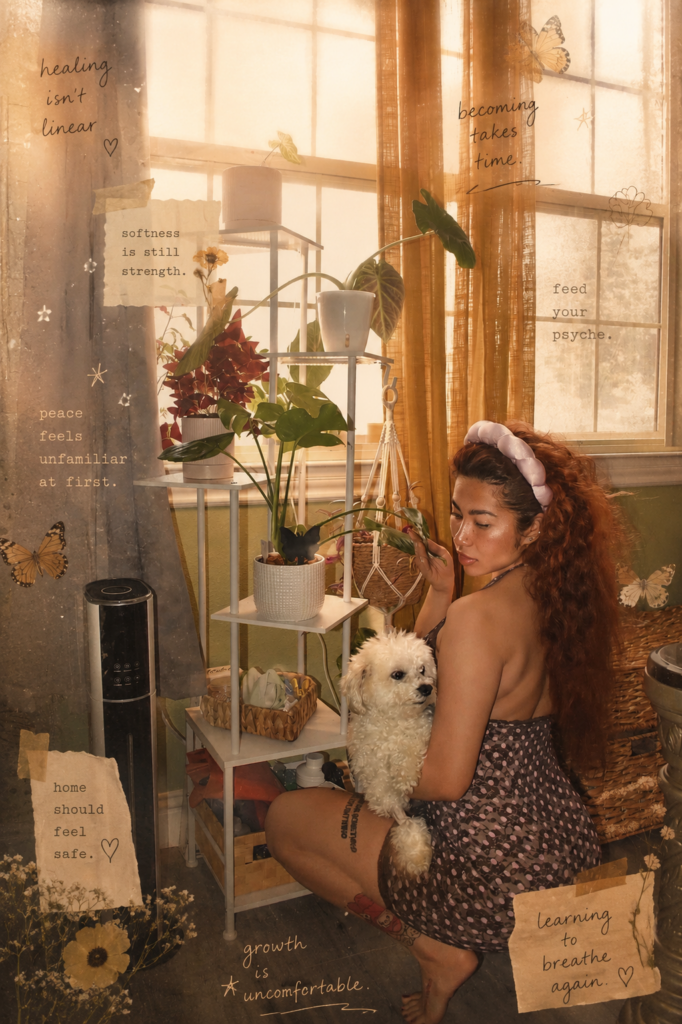
Every once in a while, somebody appears online who doesn’t feel like they were built for one medium.
Not just music.
Not just fashion.
Not just art.
Not just aesthetics.
A presence.
The kind of person whose creativity leaks into literally everything they touch because creating isn’t a career choice to them — it’s how they process being alive.
That’s SOPHIA DAO.
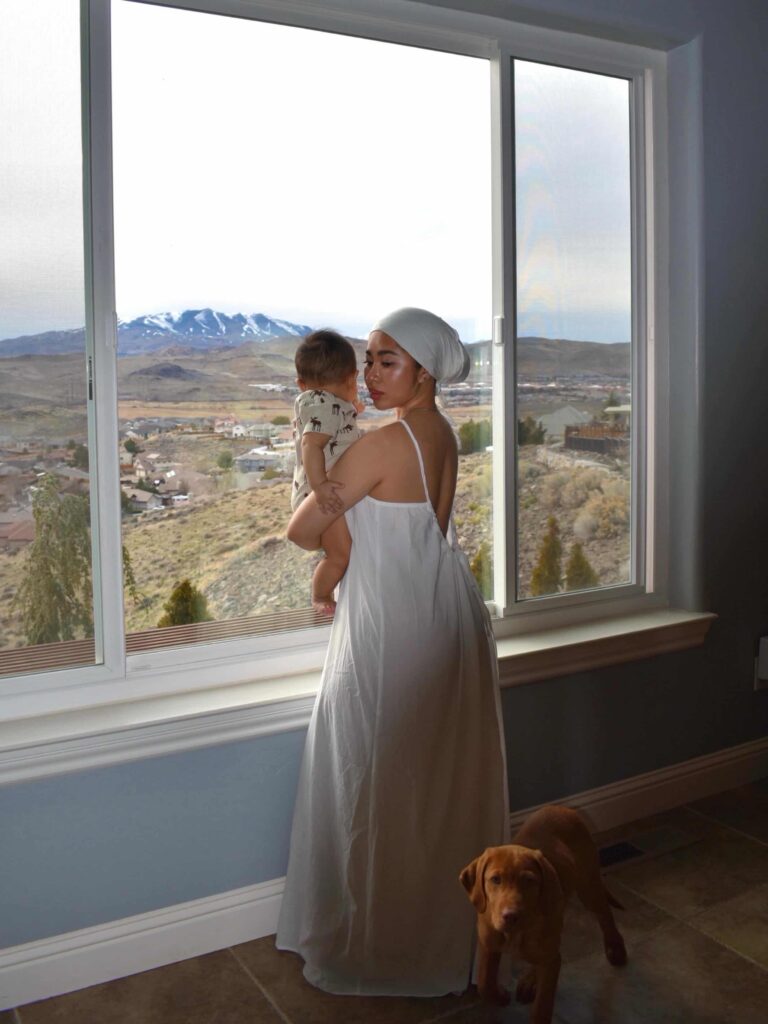
Known online as @phialanthropy, the Sparks, Nevada multi-creator exists somewhere between emotional chaos, hyperactive introspection, surreal visual art, neo-soul vulnerability, internet-era femininity, and the type of late-night overthinking that either destroys people or accidentally turns them into artists.
And honestly? She seems fully aware of that.
“I am everything at once,” she says. “And I make sure to always show it.”
That line alone explains almost her entire creative identity.
Because SOPHIA DAO doesn’t move like somebody trying to force herself into one lane long enough to become digestible. If anything, the refusal to stay inside a single box is exactly what makes her stand out in the first place.
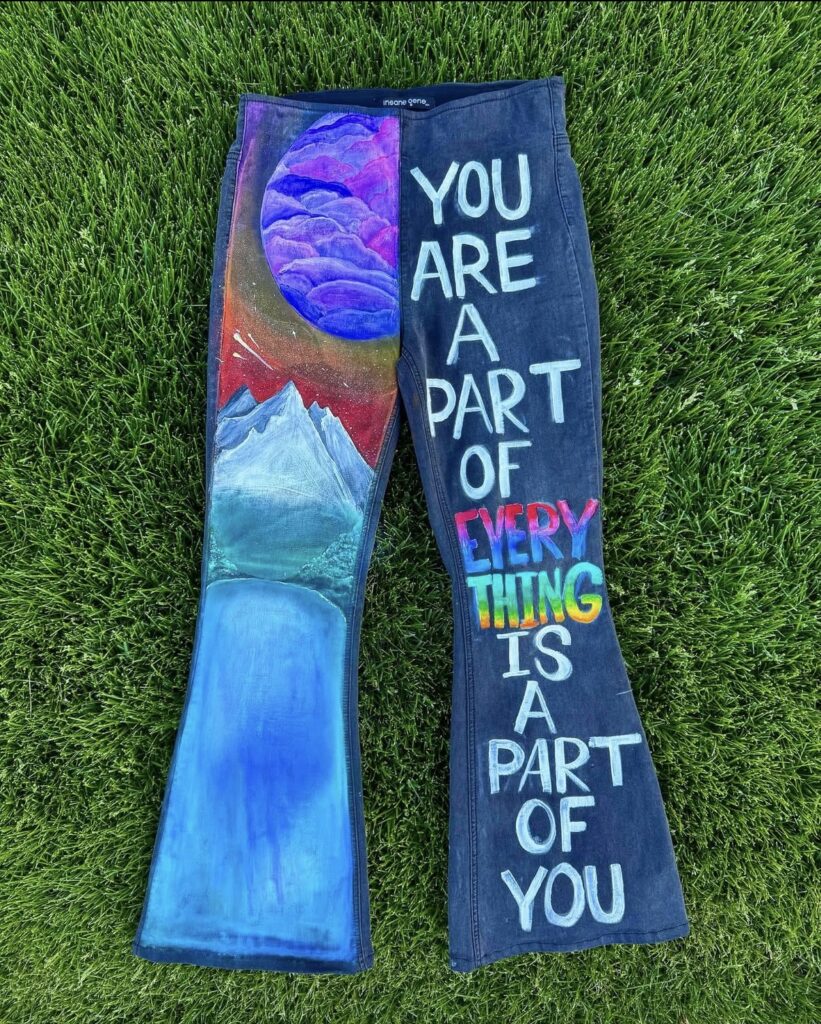
Music.
Writing.
Clothing.
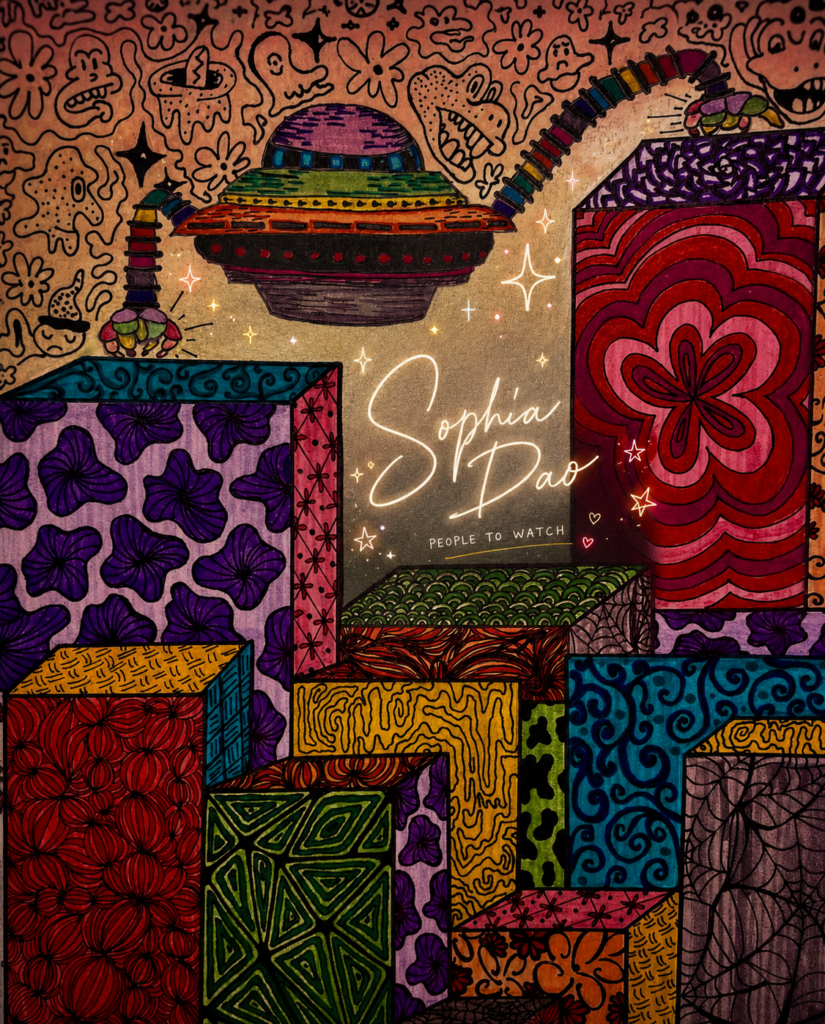
Pottery.
Custom artwork.
Paintings.
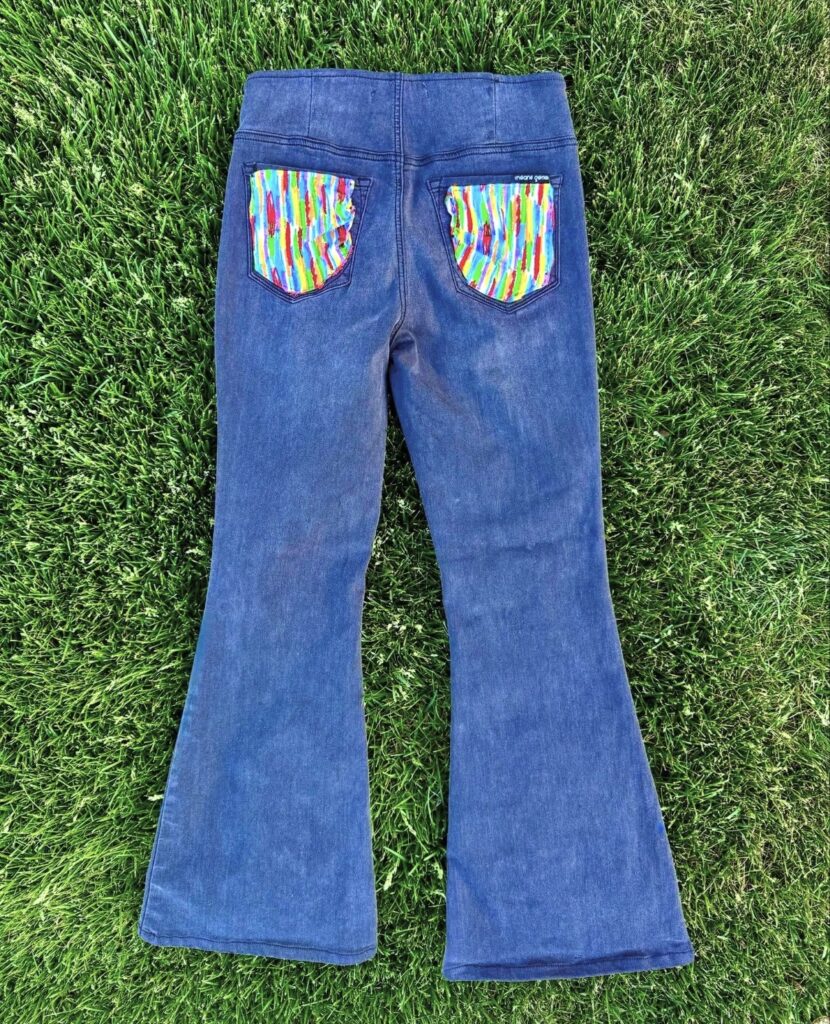
Upcycled fashion.
Handmade products.
Psychedelic visual concepts.
“If I get obsessed with something creatively enough,” she says, “I’ll probably figure out how to do it.”
And the scary part?
You believe her.
Not because she’s loud about her talent, but because everything about the way she speaks feels compulsively creative. Like her brain physically refuses to stop building things long enough for her to become comfortable existing normally.
That same restless energy is now being poured directly into one of her most personal projects yet: a 52-card affirmation and healing deck titled Feed Your Psyche.
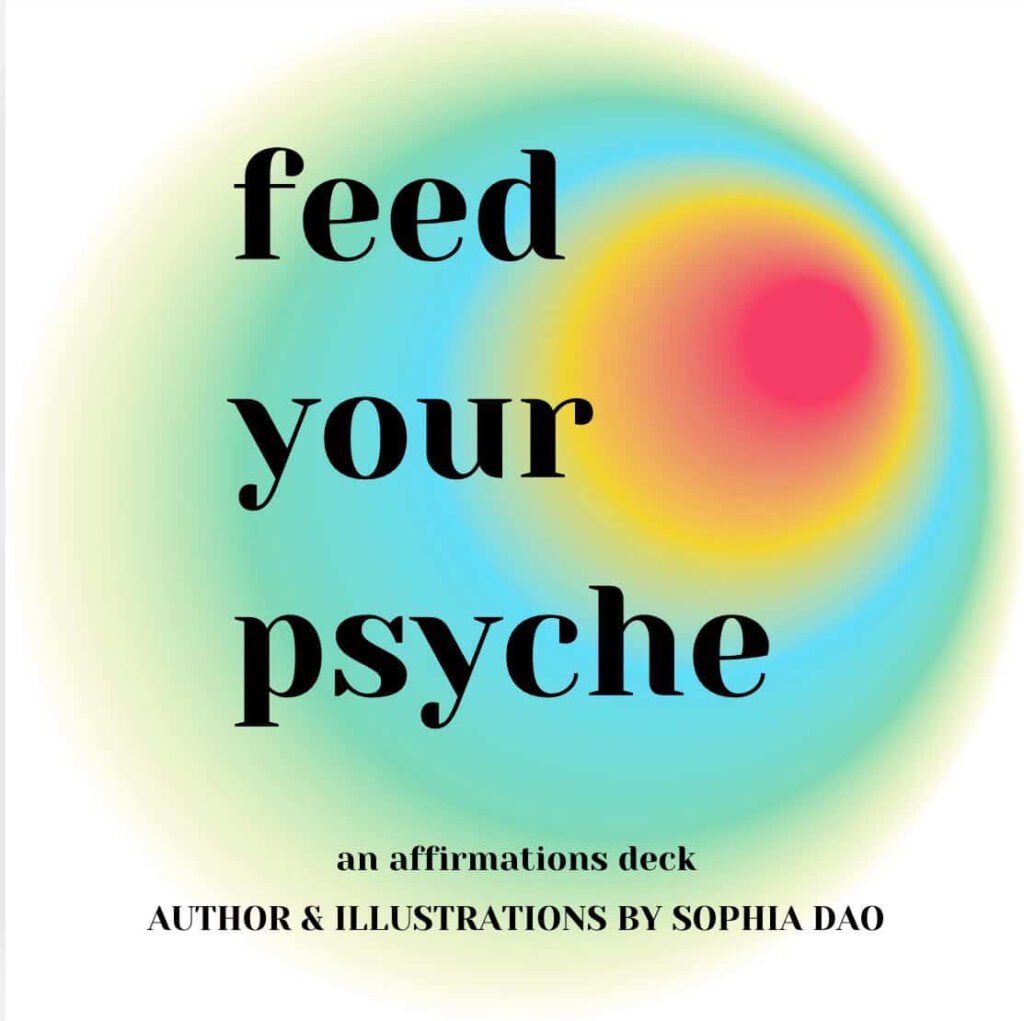
But calling it an “affirmation deck” honestly undersells what it actually sounds like.
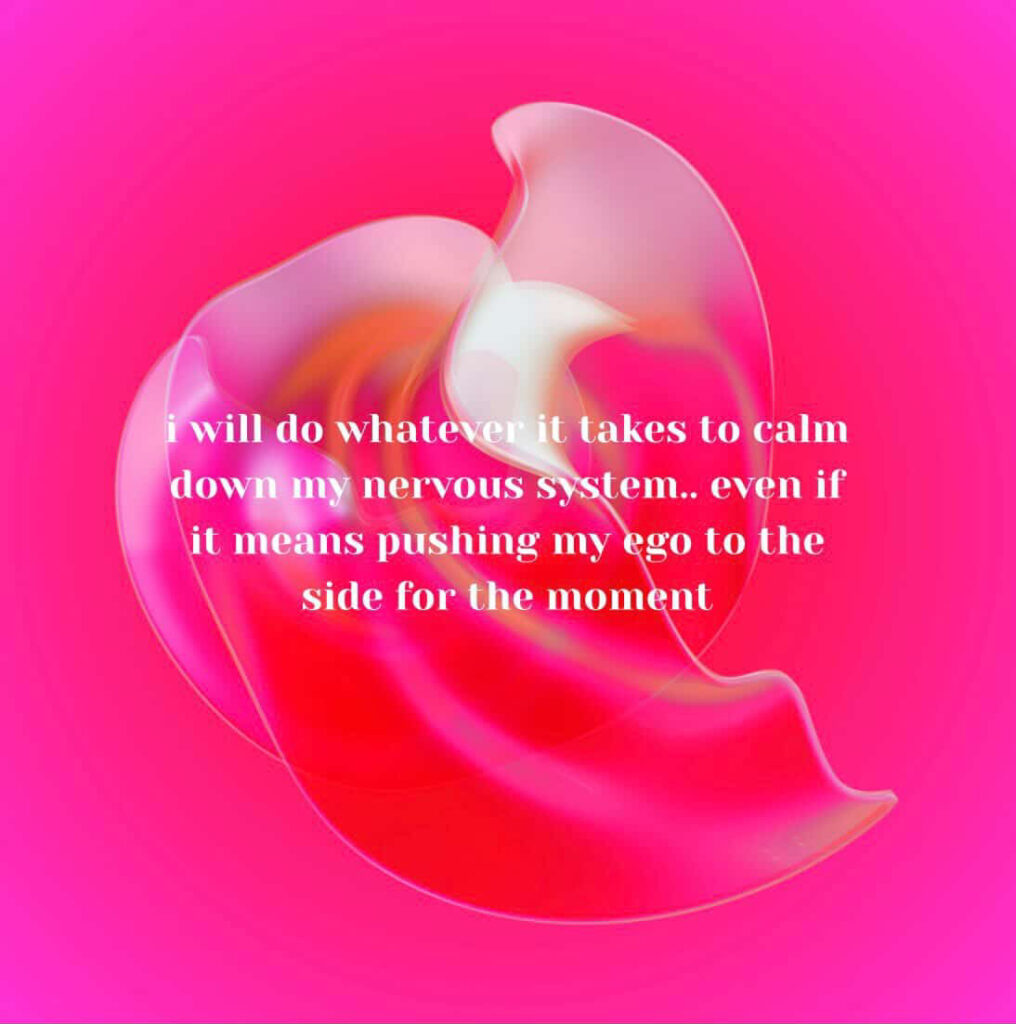
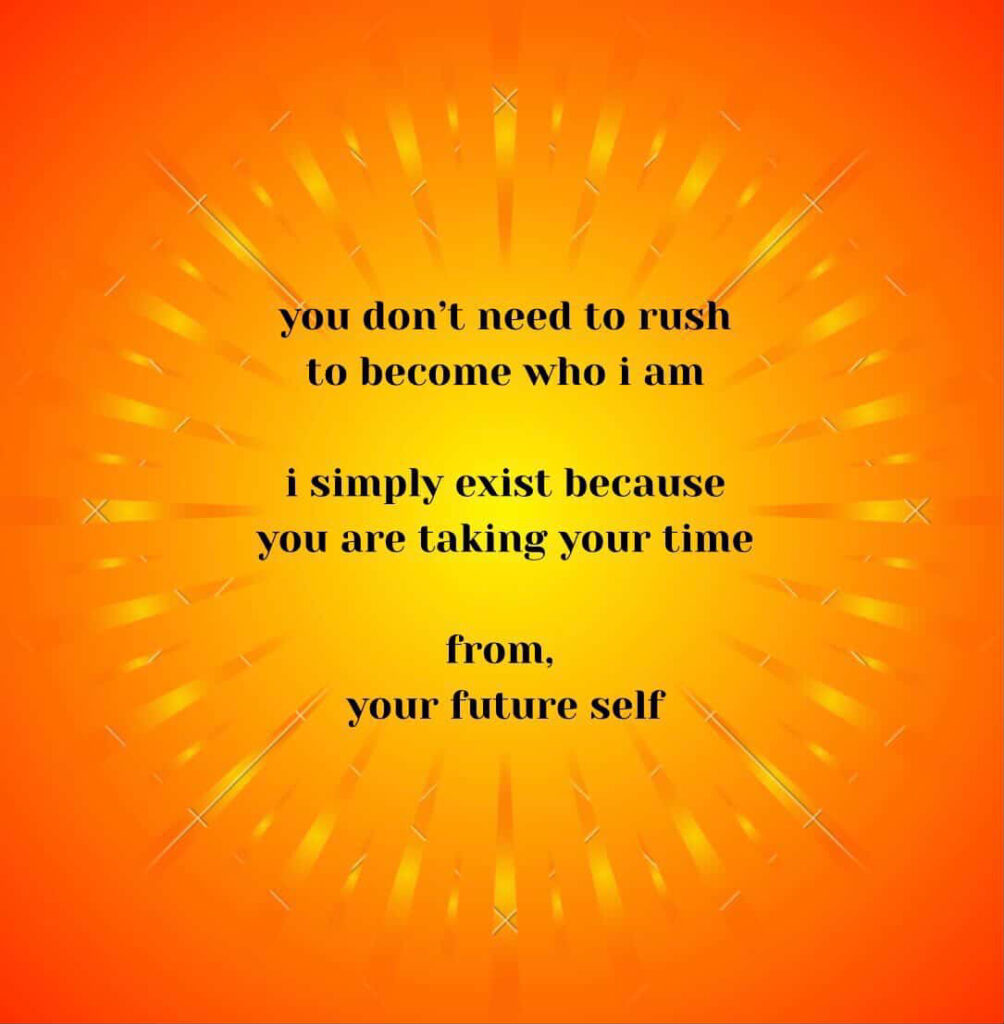
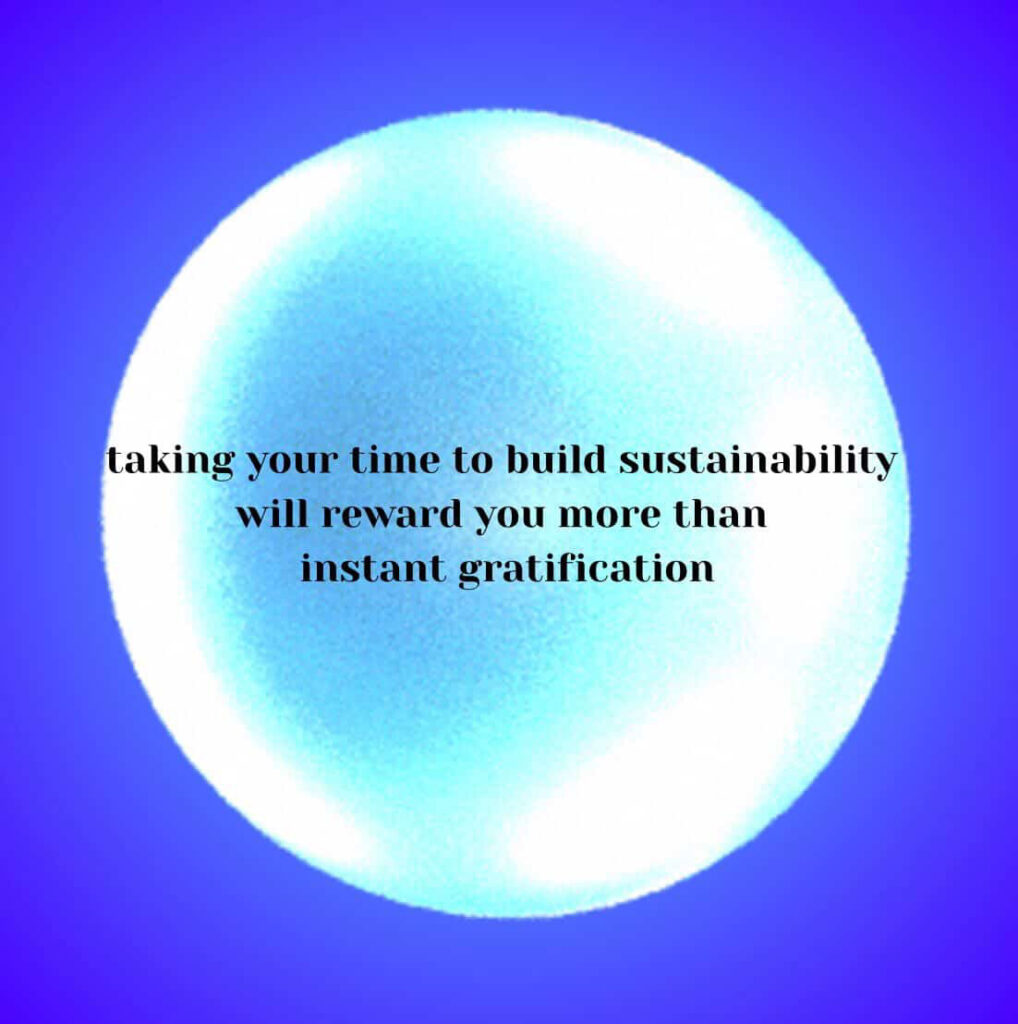
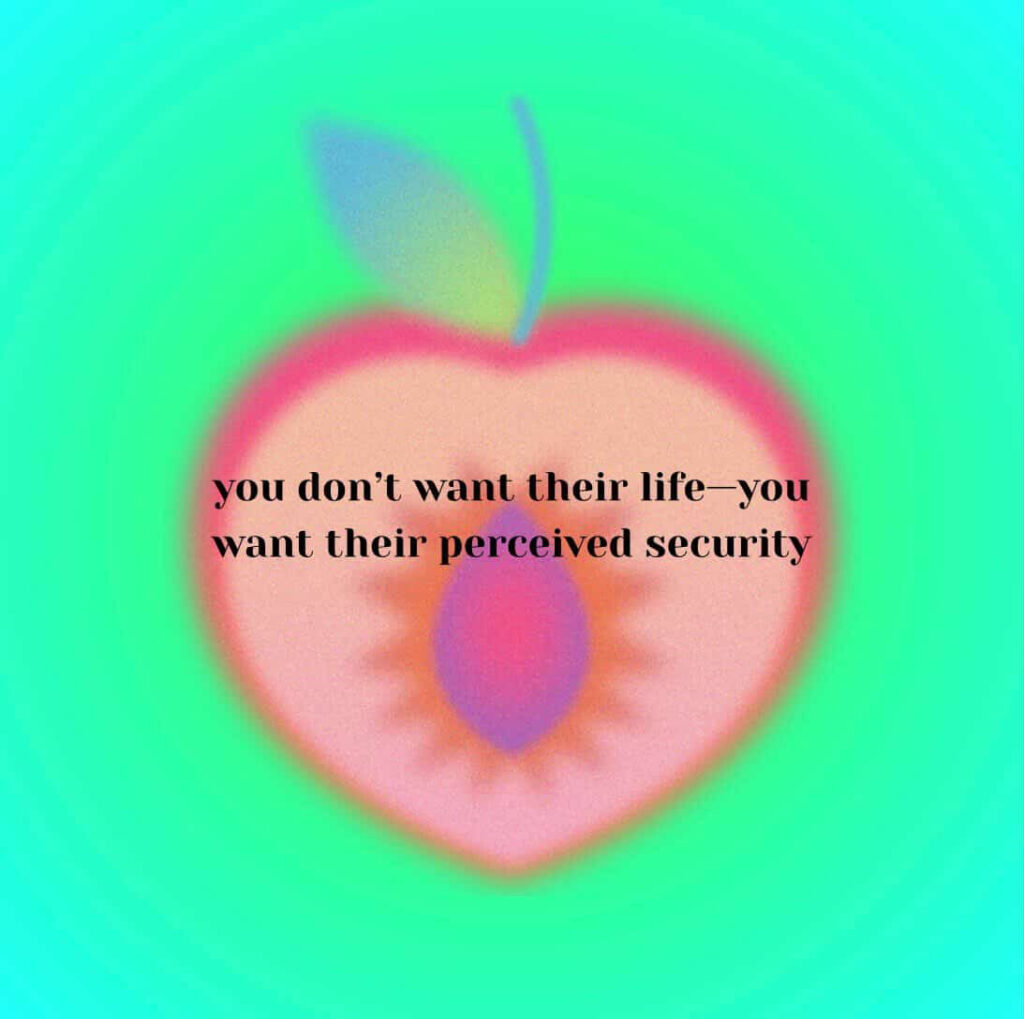
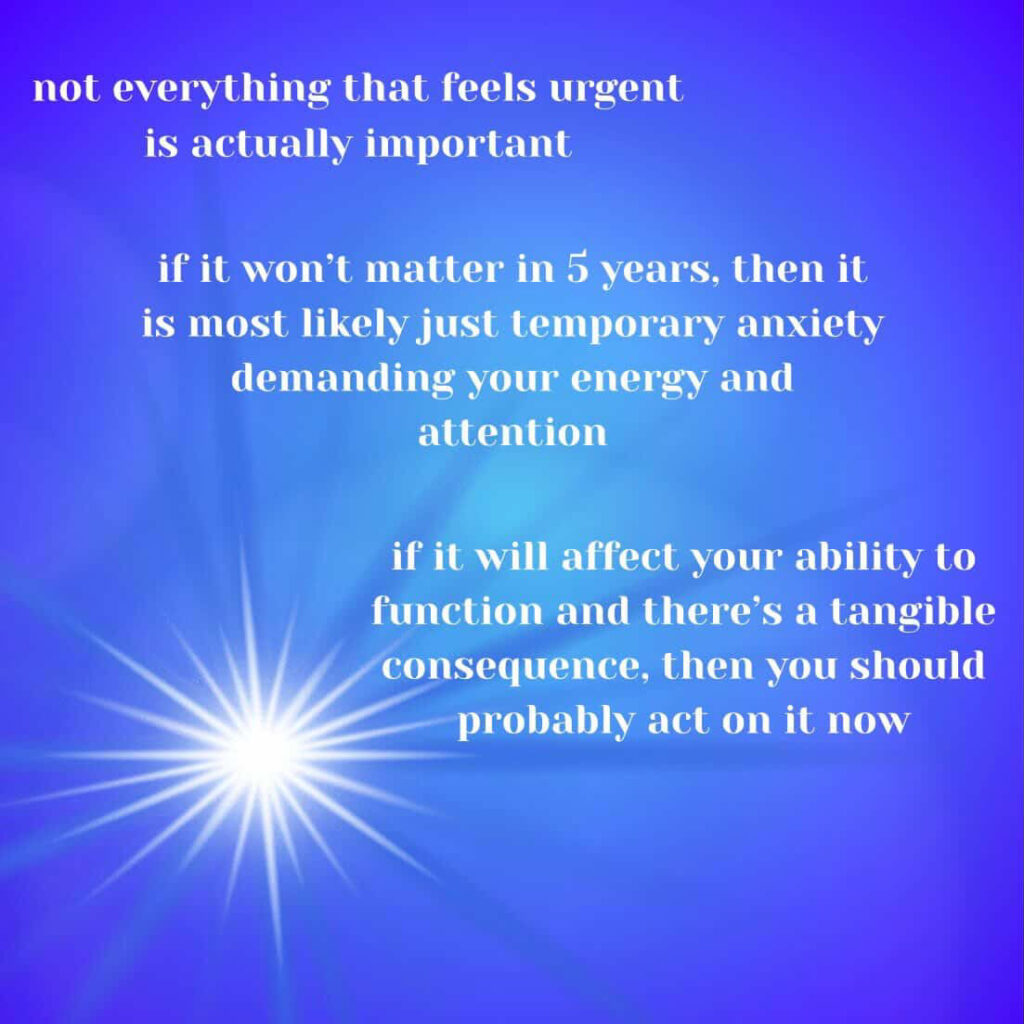
The project feels more like emotional survival tools disguised as art pieces — surreal, colorful, aura-heavy, psychedelic visuals paired with reassurance, healing language, emotional reflection, and reminders for people trying to navigate life without completely mentally collapsing in the process.
“A lot of the thoughts in the deck came from my own healing journey,” SOPHIA DAO explains. “Which I’m still in by the way.”
That last part matters.
Because unlike a lot of internet wellness culture, SOPHIA DAO doesn’t pretend healing is clean or linear or aesthetically pleasing all the time. She talks about it the way people actually experience it: messy, exhausting, inconsistent, emotionally confusing, and deeply human.
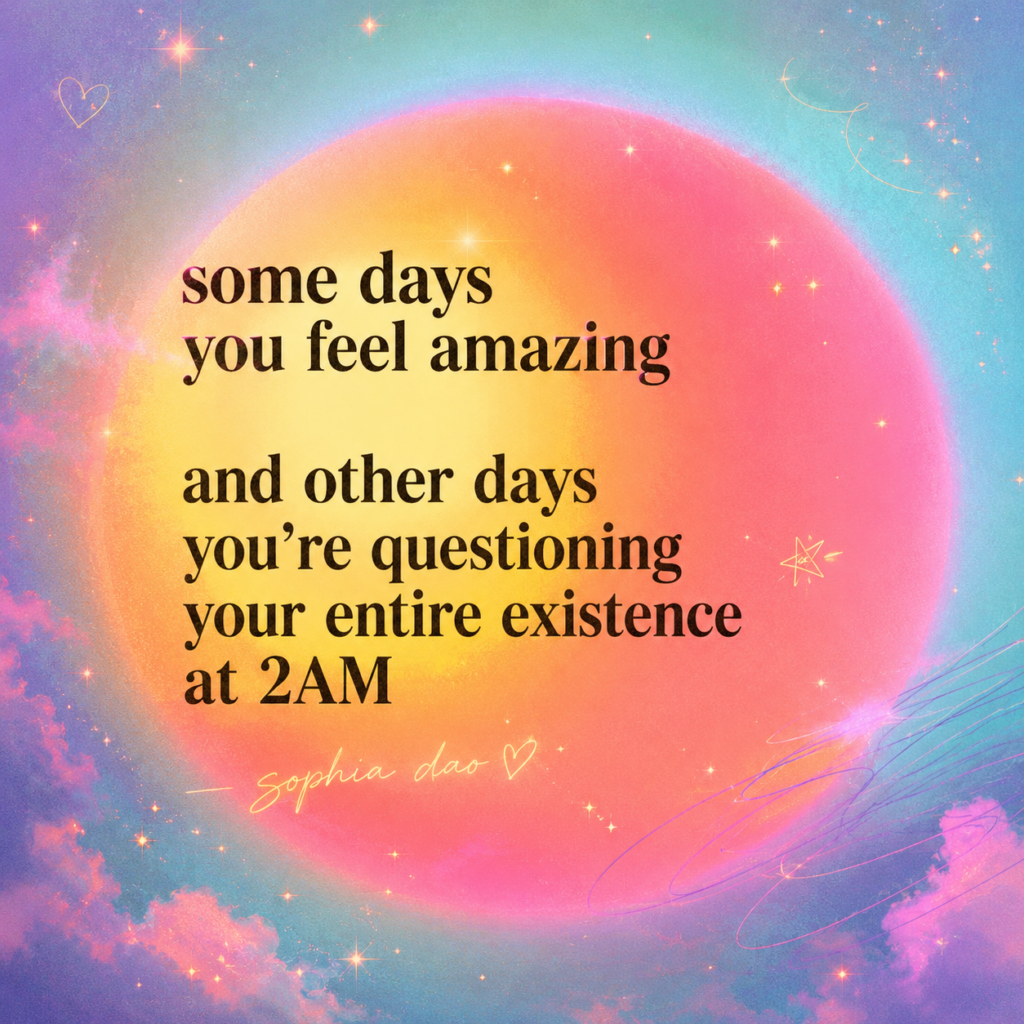
And honestly, that level of self-awareness runs through almost everything about her.
SOPHIA DAO openly admits she overthinks everything. Constantly analyzing patterns, intentions, behaviors, energy shifts, emotional inconsistencies, manipulation, and herself with almost exhausting intensity.
“My brain literally never shuts off,” she says.
Which probably explains why her work feels so emotionally layered.
Not curated.
Layered.
There’s a difference.
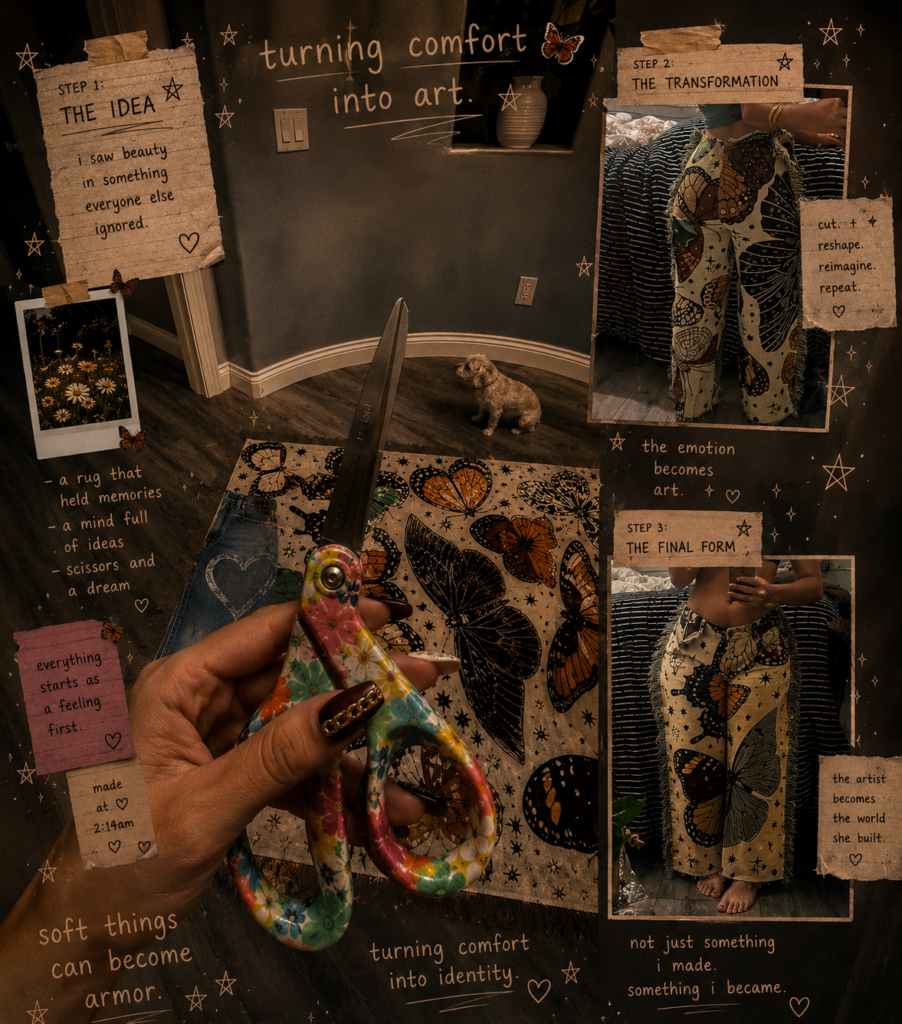
Most people online build aesthetics.
SOPHIA DAO feels like she accidentally builds worlds.
Worlds filled with softness, surrealism, emotional honesty, femininity, overstimulation, vulnerability, obsession, healing, heartbreak, and transformation all existing at the same time.
And underneath all of it is somebody clearly trying to become a stronger version of herself without losing the softness that made her creative in the first place.
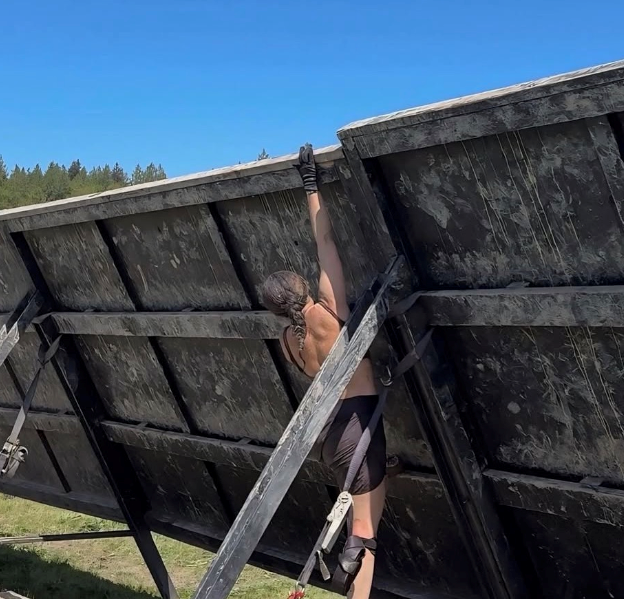
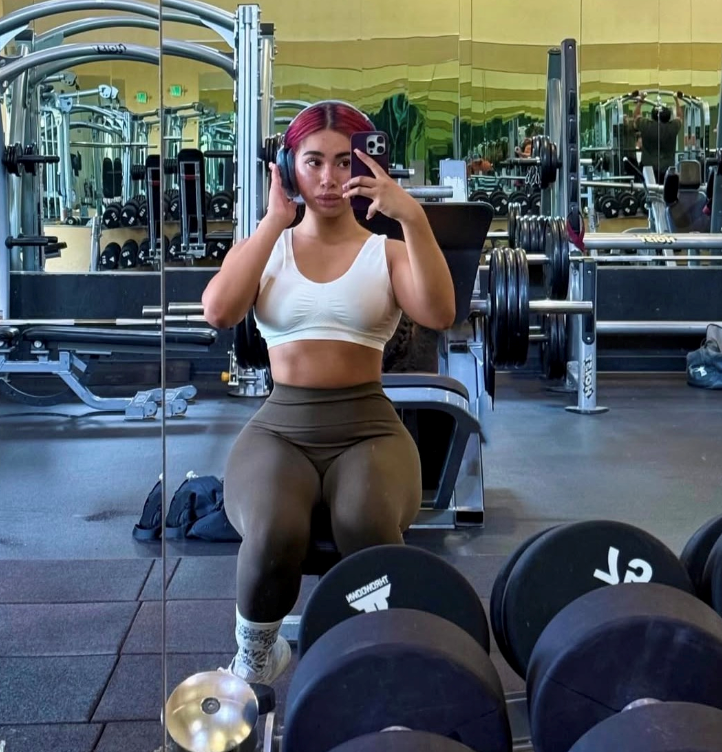

“Right now I’m honestly just trying to become the best version of myself without mentally destroying myself in the process,” she says.
That might be the most relatable sentence anybody’s said all year. We applaud you SOPHIA DAO.
Especially because she doesn’t speak like somebody pretending to have life figured out already. She sounds like somebody actively rebuilding herself in real time while still creating through the confusion anyway.
And maybe that’s why people connect to her.
Not perfection.
Recognition.
The feeling of hearing somebody articulate thoughts most people quietly carry around without knowing how to explain. Something she does eloquently through her music available on the following platforms.
Click on each one below to tap in with SOPHIA DAO, who curates as a musician under the moniker PHIA.




That emotional honesty becomes even more interesting when paired with how mentally sharp she actually is. SOPHIA DAO openly jokes that people underestimate her intelligence because she doesn’t always articulate her thoughts perfectly the first time.
But underneath the self-awareness is somebody deeply observant.
“I notice everything,” she says. “Energy, patterns, manipulation, weird behavior, intentions.”
And honestly?
You can feel that immediately.
Especially in the way she talks about heartbreak — something she admits has almost completely stopped her in her tracks multiple times throughout her life.
“That kind of pain paralyzes me for a little while every single time,” she says. “I overanalyze everything to death.”
But even then, she always finds her way back to creating eventually.
Always.
Because underneath the emotional spiraling and overthinking is somebody driven by something much bigger than outside validation.
“If nobody supported you, what would you do?”
“The exact same thing I’m doing right now.”
That mindset alone separates creatives from people simply chasing attention online.
And maybe that’s the real reason SOPHIA DAO feels important this early.
Not because she already has everything figured out.
Not because she’s pretending to be some perfectly polished finished product.
But because she feels like somebody actively discovering the full range of what she’s capable of in real time — and artists like that tend to become impossible to ignore eventually.
Especially when they combine emotional intelligence, artistic instinct, visual identity, vulnerability, and creative fearlessness the way SOPHIA DAO already does naturally.
Most people spend their lives trying to become more comfortable.
SOPHIA DAO sounds significantly more interested in becoming more alive.
And honestly?
That usually creates the most dangerous artists in the long run.
Follow SOPHIA DAO and keep up with everything she’s building next below.
Instagram:
@phialanthropy
DOCUMENTED BY CHARGEIT2THAGAME
PHIA Sounds Like The Internet Fell In Love Again
There’s a certain kind of music that doesn’t feel discovered so much as stumbled into accidentally at 2:37 in the morning while your room is dark except for the glow of a laptop screen and whatever emotional disaster you’re currently trying not to think about.
The kind of music that feels attached to internet eras people still quietly mourn.
MySpace profile songs.
Tumblr heartbreak aesthetics.
AIM away messages that somehow felt more honest than real conversations.
That strange late-2000s/early-2010s internet where everybody was sad, romantic, overexposed emotionally, and trying to survive themselves through music.
PHIA sounds like that world reincarnated through futuristic speakers.
Not copied.
Not imitated.
Remembered.
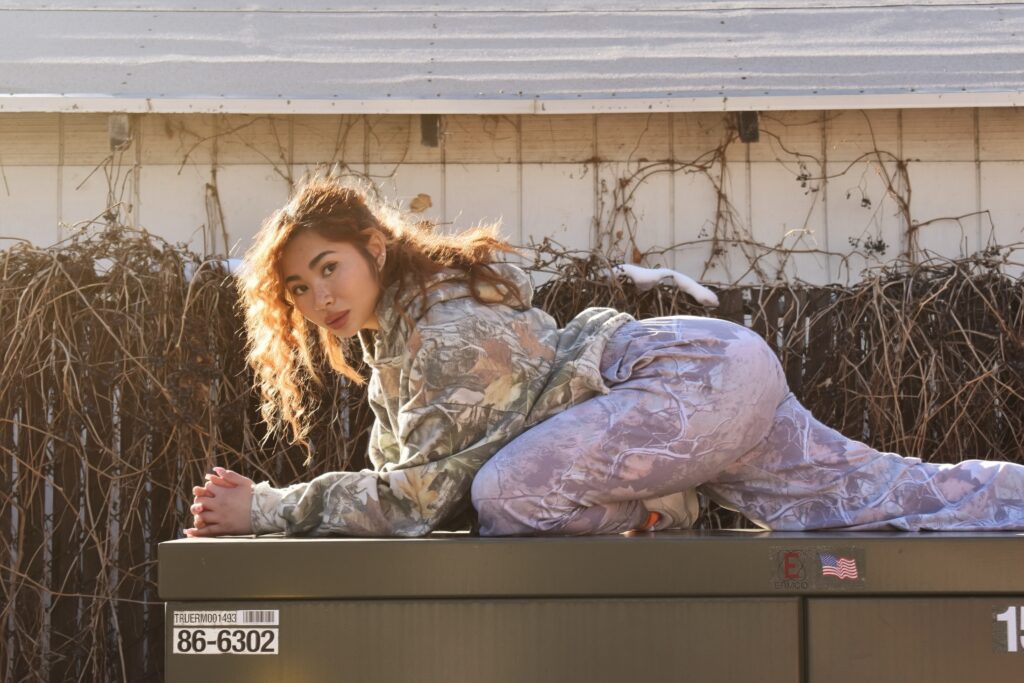
PHIA — known online as @phialanthropy — makes music that feels atmospheric in the truest sense of the word. Not “vibes” in the empty internet way people use the term now. Actual atmosphere. Songs that feel like environments. Emotional weather systems. Dream sequences floating somewhere between neo-soul, alternative R&B, futuristic lounge music, diary entries, and complete emotional collapse.
And what makes it all hit harder is the fact that none of it sounds calculated.
Nothing about PHIA feels algorithm-built.
She doesn’t sound like somebody who sat in a boardroom trying to reverse-engineer virality. She sounds like somebody who physically needed these emotions to leave her body before they consumed her alive.
“The art says everything I don’t,” she explains early in our conversation. “That’s the most honest version of me there is.”
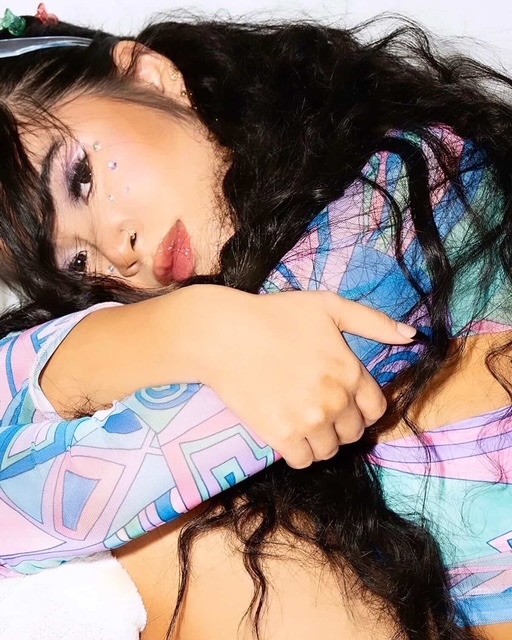

That line alone explains almost everything.
Because PHIA’s music doesn’t feel performed.
It feels leaked.
Like you accidentally found somebody’s private thoughts uploaded to streaming services.
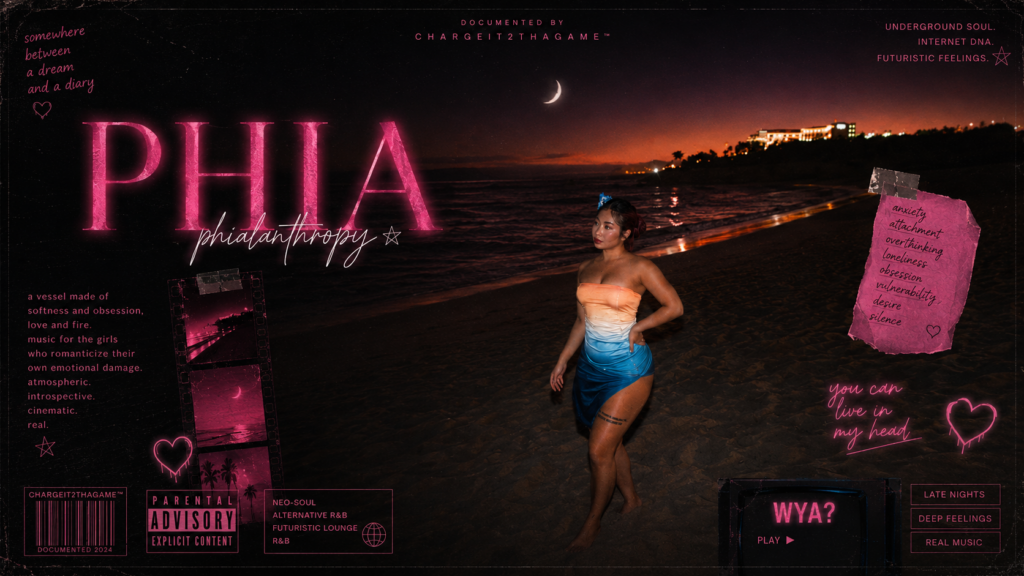
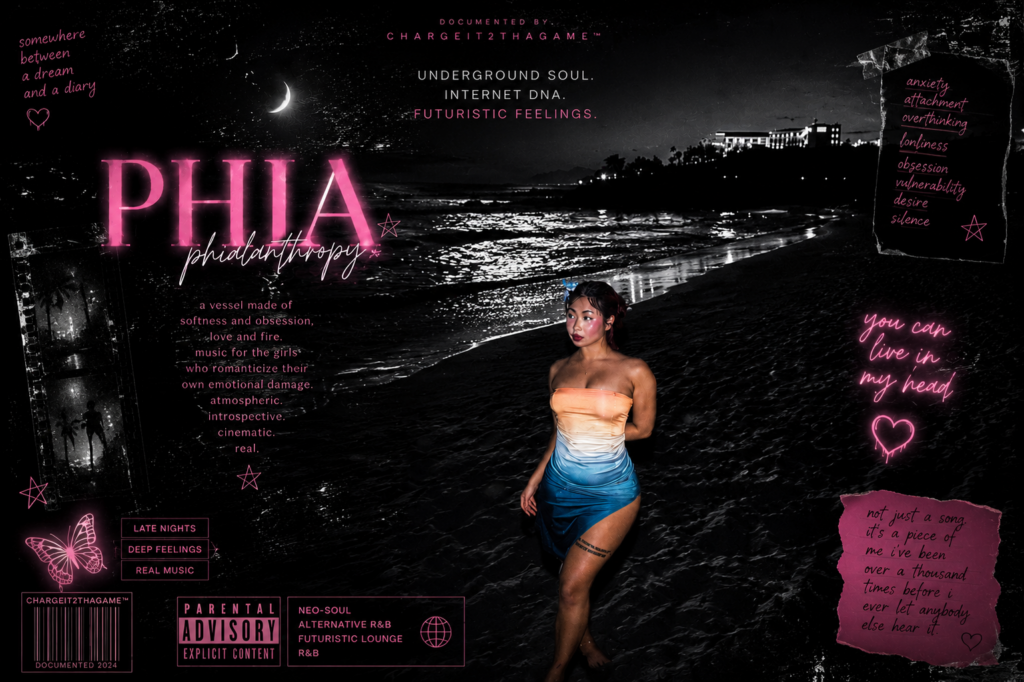
The Sparks, Nevada artist describes herself as “a vessel” made equally from softness, obsession, love, impulsiveness, vulnerability, peace, passion, and fire. The contradiction isn’t accidental. It’s foundational to everything she creates.
“I am everything at once,” she says. “And I make sure to always show it.”
And honestly?
You can hear that immediately.
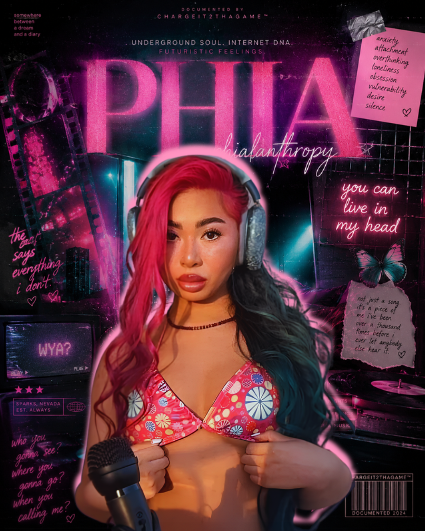
One moment her music feels featherlight and heavenly. The next it spirals into emotional hyperfixation, attachment, overthinking, loneliness, anxiety, lust, frustration, melancholy, and obsession all at once. Her catalog moves the way actual emotions move — inconsistently, irrationally, beautifully.
Not flattened.
Not polished.
Not emotionally sanitized for mass consumption.
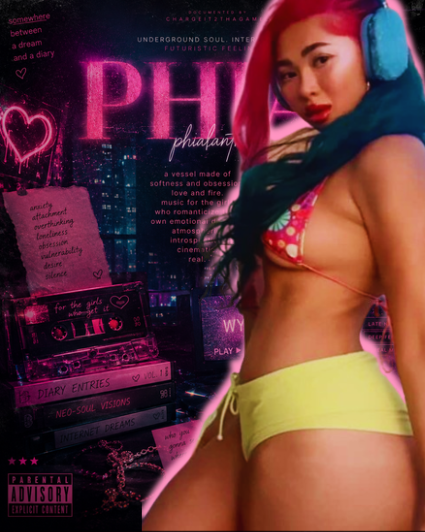
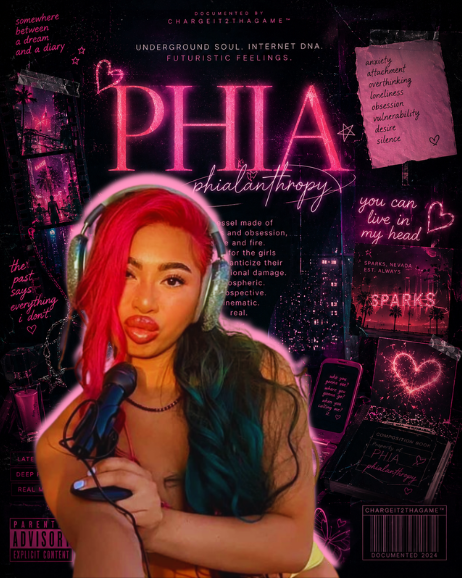
Real.
PHIA first started uploading music around fourteen years old through SoundCloud, but she admits none of it felt intentional the way it does now. Something changed around twenty after finally uploading music to streaming platforms and watching strangers connect to it in real time.
“They knew the lyrics,” she says. “They were putting it in their reels, their stories, their posts. And I remember feeling so genuinely seen.”
That distinction matters heavily to her:
being heard versus being understood.
Because for PHIA, music was never really about attention first. It was release. Translation. Escape. A place for every thought she couldn’t comfortably say out loud to finally go somewhere else instead.
And maybe that’s exactly why the records land the way they do.
Especially “WYA?” — the song she specifically says new listeners should hear first.
Not because it’s the safest choice.
Not because it’s the most commercial.
Because it’s the clearest reflection of who she actually is.
Listening to “WYA?” feels eerily similar to discovering the perfect MySpace profile song back when internet identity still felt emotional instead of performative. The kind of record you’d permanently attach to your page because it somehow articulated exactly how your life felt better than you could yourself.
The DNA of the early internet lives inside this song.
Not nostalgically.
Spiritually.
PHIA’s voice drifts through the production like memory itself — airy, dreamy, emotionally unstable in the best possible way. One second she sounds soft enough to disappear into the instrumental completely. The next she sounds like she’s emotionally unraveling in real time.
“You don’t pick up your phone and I just want you home.”
Simple line.
Devastating feeling.
Because everybody knows exactly what emotional state that belongs to.
The convo in your head at 2AM.
The staring at your phone.
Trying not to text again.
Trying not to care.
Caring anyway.
“What you gonna do, who you gonna see, where you gonna go, when you calling me?”
The questions stack on top of each other until the song almost starts feeling claustrophobic emotionally. Love, anxiety, attachment, melancholy, frustration, obsession — all colliding together before finally detonating during the outro when PHIA snaps: “Oh, so now you want to pick up… tell me where the fuck you were at.”
And suddenly the softness turns sharp.
That emotional layering is what separates the song from generic heartbreak music.
It isn’t just sad.
It isn’t just empowering.
It’s honest.
And honesty seems to be the core of PHIA’s entire creative identity.
“I want people to feel less alone,” she says.
That desire bleeds through nearly everything she creates because she understands how isolating internal thoughts become when nobody says them out loud, her music constantly circles themes most people quietly carry every day: anxiety, emotional attachment, overthinking, vulnerability, loneliness, obsession, silence, self-doubt.
And maybe that’s why the records feel so intimate.
They don’t sound like they were made for crowds first.
They sound like they were made for one person alone in the dark trying to survive their own thoughts.
Sonically, PHIA exists in a fascinating lane because she refuses to fully settle into one identity. Some records drift heavily into dreamy neo-soul and atmospheric R&B. Others flirt with experimental pop structures. Others feel closer to cinematic soundscapes than traditional songwriting entirely.
At times the influence of Jhené Aiko becomes obvious — especially in the softness of her emotional delivery and spiritual vulnerability. Other moments feel spiritually adjacent to SZA or a less industry-polished version of Doja Cat. There are traces of Billie Eilish floating through the atmospheric production choices too, except PHIA’s music often feels more psychedelic emotionally.
And weirdly enough, one of the strongest comparisons might actually be Jon Bellion.
The layering.
The experimentation.
The emotional architecture.
The cinematic composition.
Because PHIA’s records constantly feel larger than simple genre labels. The songs feel designed like emotional environments more than traditional structures.
“CATWOMAN” especially feels like a criminals’ slow jam for nights they aren’t out breaking laws. Heavy and featherlight at the same time. Seductive without trying too hard. The hook — “you can live in my head” — drifts through the production while softer airy vocals wrap around it like smoke curling through neon light.
Meanwhile “DO4LUV/GANGSTA” feels almost extraterrestrial emotionally. PHIA’s voice becomes less of a delivery system and more of an instrument itself, climbing higher through the production while melodies dissolve into each other. Listening to it feels less like hearing a song and more like being serenaded in outer space.
Every piece of unreleased material shows signs of an artist discovering instincts in real time.
“EGYPTIAN DUNES” leans almost entirely into sonic hypnosis — cinematic vocalization more concerned with emotional feeling than conventional structure.
“DOWN” is a snippet with more emotion than full tracks.
Even the features and covers carry weight.
“THE PLAYBOOK” by SEI ft. PHIA, carries production reminiscent of House of Balloons-era darkness.
A cover of FRANK OCEAN’S “WHITE FERRARI” reaches almost absurd levels of emotional composition where the notes and vocal layering feel like final brush strokes completing a massive painting.
And then there’s “DIFFERENT CLOTH” — a feature on a PAEKA song, the clearest sign that PHIA’s ceiling as an artist is significantly higher than people initially expect…or give her credit for. Here she isn’t just singing beautifully. She’s talking her shit. Reflective. Introspective. Honest. The flow stays gentle while the writing itself carries emotional weight.
PHIA shines on covers such as “THINKIN'” by JEAN DEAUX and on “SLOWDOWN” by BOBBY VALENTINO.
And all of this is happening through BandLab.

Fucking. BANDLAB.
“The fact that my music sounds the way it does coming out of that app is honestly a miracle,” she laughs.
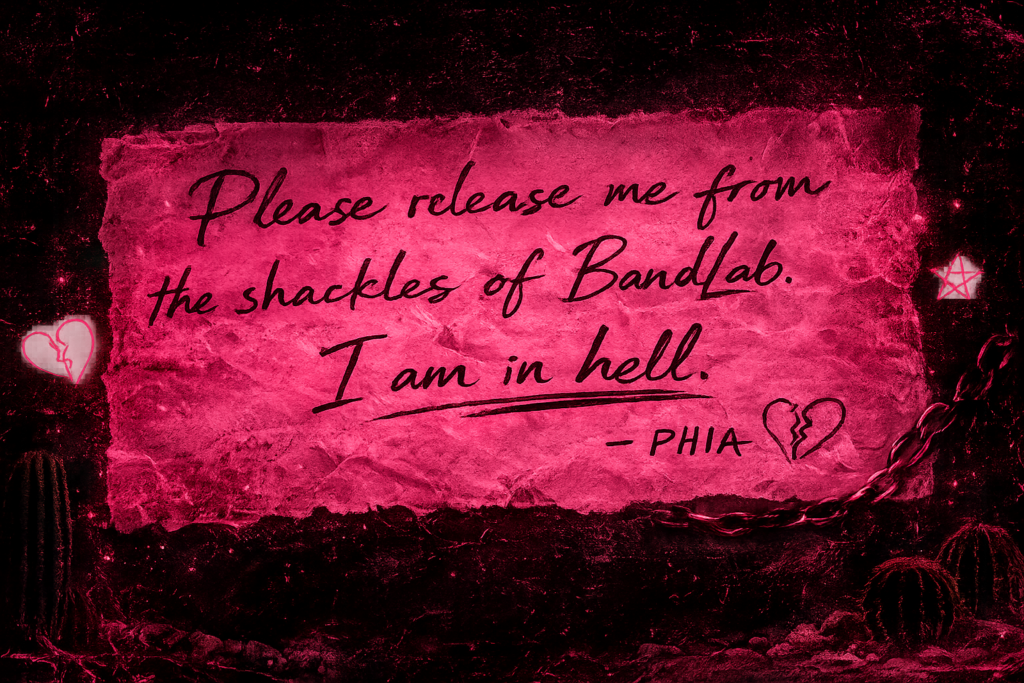
The quote lands because behind the humor is something bigger: resourcefulness.
A reminder that some artists don’t emerge from million-dollar studios. Some emerge from bedrooms. From headphones. From obsession. From replaying the same vocal chain until sunrise because the feeling still isn’t translating correctly yet.
And PHIA is obsessive.
Painfully so.
She describes herself as hypercritical to the point of exhaustion — replaying projects endlessly, changing tiny details repeatedly before finally allowing herself to release anything.
“It’s never just a song,” she says. “It’s a piece of me I’ve been over a thousand times before I ever let anybody else hear it.”
That perfectionism has also become one of her biggest battles. Consistency remains difficult. Real life interrupts creativity. Energy disappears. Adulthood demands things from artists that inspiration alone can’t always overpower.
“Just being a human being in this day and age takes everything out of you sometimes,” she says.
But the music never fully leaves.
“It’s always there waiting.”
That line says more than most artists communicate in entire albums.


Because underneath all the humor, vulnerability, internet fluency, and emotional chaos, PHIA ultimately sounds like somebody in an ongoing relationship with creation itself. Not virality. Not clout. Creation.
Virality chases attention.
Creation chases truth.
PHIA seems significantly more interested in the second one.
That mindset becomes even clearer when discussing support — or the absence of it.
When asked what almost made her quit, her answer comes instantly:
“Silence.”
Not hate.
Not criticism.
Not failure.
Silence.
Posting something deeply personal only to feel ignored by the world around you. Watching vulnerability disappear into algorithms without reaction.
“At a certain point it starts to feel embarrassing,” she admits before laughing through the frustration.
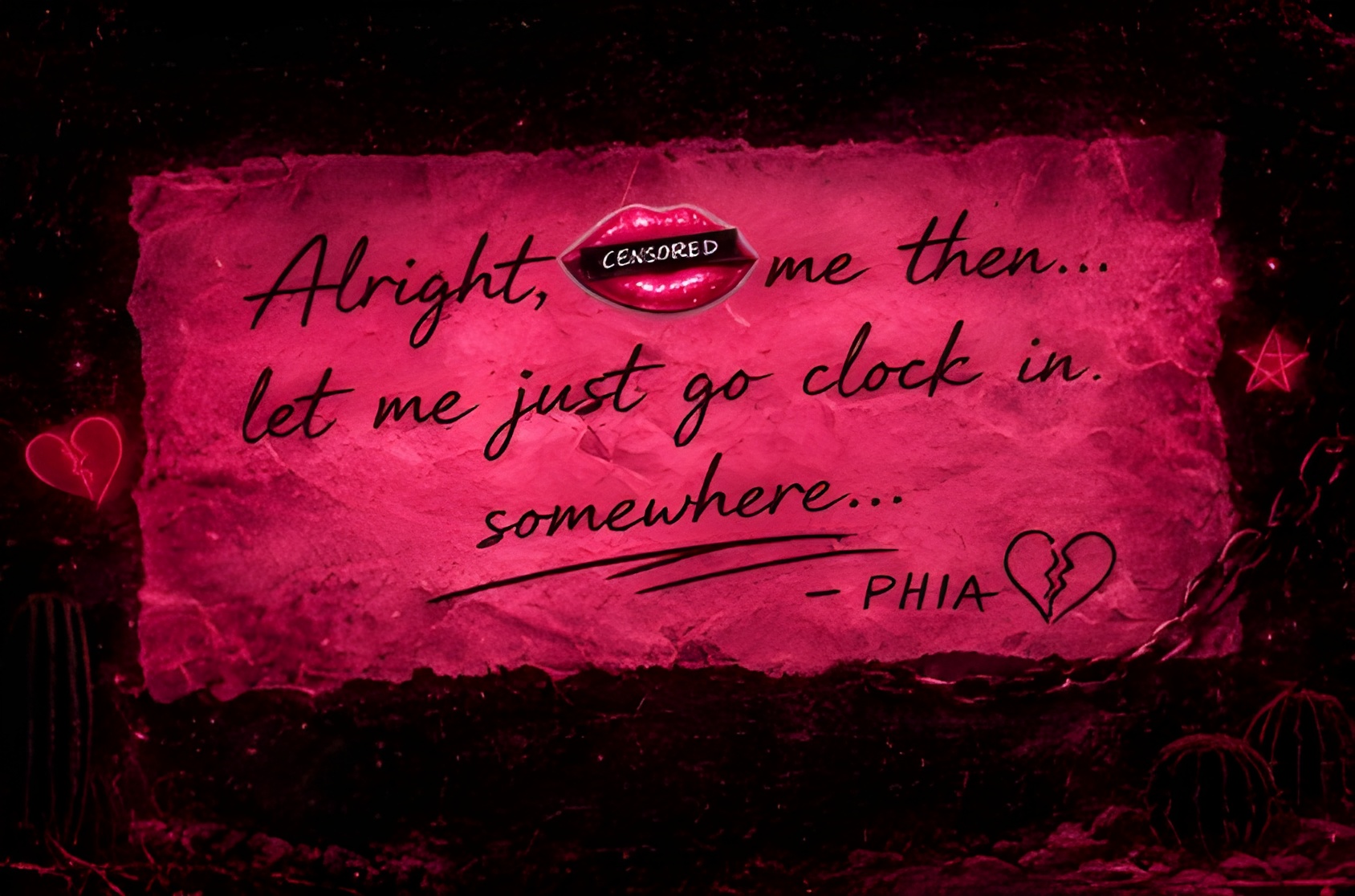
But the joke only half-hides the exhaustion underneath it.
Because there’s something uniquely painful about vulnerability meeting indifference.
Still, even then, she couldn’t stop creating.
“Supporting me was never their job,” she says. “My purpose is to create.”
And honestly?
That perspective might be exactly why she’ll survive this industry.
Because despite all the softness, there’s steel underneath PHIA too.
It appears suddenly throughout the interview in flashes:
“I’m going to prove everyone wrong.”
“You can’t take me out the game that easy, bitch.”
“She is everything you’re scared of.”
Moments where vulnerability hardens into ambition.
And that ambition feels earned.
Because PHIA doesn’t sound like somebody trying to become an artist anymore.
She sounds like somebody already living as one whether the world catches up immediately or not.
That difference matters.
Especially now.
Because in an era oversaturated with disposable singles, copy-paste aesthetics, TikTok-first songwriting, and algorithm-manufactured personalities pretending to have emotional depth they never actually earned, PHIA feels increasingly rare:
an artist with atmosphere.

Not just songs.
Not just visuals.
Not just branding.
Atmosphere.
The type that lingers after the music stops playing.
The type that makes people replay records not because they fully understand them yet — but because they’re trying to return to whatever emotional place the song just dragged them into.
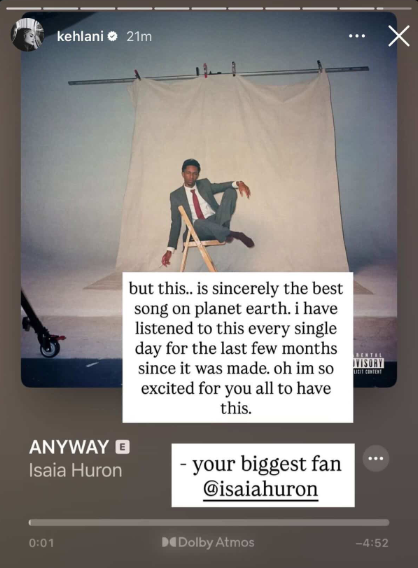
And maybe the clearest proof of that is already happening quietly in real time. PHIA’s voice recently appeared during the haunting outro of “ANYWAY” by Isaia Huron — the same record Kehlani publicly called “the best song on planet earth.” It’s the kind of detail most people overlook until years later when they realize an artist they now can’t escape was already floating through records they loved before they even knew her name. That’s the thing about presence. Real presence doesn’t always scream first. Sometimes it lingers in the background long enough to become unforgettable.
And listening to PHIA right now feels exactly like standing too close to something that hasn’t fully erupted yet.
Because she hasn’t fully arrived.
Not even close.
This still feels like the beginning of somebody discovering the full range of what they’re capable of in real time — which honestly makes the music even more exciting. The instincts are already there. The atmosphere is already there. The emotional identity is already there.
And artists with instincts this sharp eventually become impossible to ignore.
The scary part isn’t who PHIA is right now.
It’s who she becomes once the rest of the world finally catches up to what’s already been living inside her this entire time.
Stream PHIA’s music and step into the atmosphere for yourself below.
Follow PHIA everywhere and stay connected to everything coming next:
Instagram:
@phialanthropy
TikTok:
@guavanoodles
Listen on:
Spotify
Apple Music
SoundCloud
YouTube
DOCUMENTED BY CHARGEIT2THAGAME

THE BENDIX BUILDING – EXTENDED VERSION
The Night Los Angeles Felt Real Again
There’s something different about a real underground event.
No fake industry handshakes.
No algorithm chasing.
No manufactured “viral moments.”
Just people creating because they have something to say.
On April 25, 2026, artists, performers, creators, poets, musicians, media personalities, and supporters gathered at the historic Bendix Building rooftop in Downtown Los Angeles for a night that reminded everybody what the city’s underground culture actually feels like when it’s alive.
Now, that entire experience is documented in:
“THE BENDIX BUILDING – EXTENDED VERSION”
This isn’t just a performance recap.
This is the full atmosphere.
The rooftop conversations.
The city lights.
The live performances.
The crowd energy.
The raw moments between artists.
The feeling of Los Angeles after dark.
From independent musicians and spoken word artists to underground personalities and live performers, the event became a snapshot of a creative scene that still exists outside the industry machine.
No filters.
No fake hype.
No forced image.
Just art, people, music, and the city.
The extended version captures the night exactly how it happened — unpolished in the best way possible, with Downtown LA serving as the backdrop for a room full of creators building culture in real time.
Huge respect to everybody who performed, attended, supported, reposted, filmed, networked, and showed love throughout the night.
Special shoutout to Underground Hype Events for continuing to create opportunities and physical spaces for independent culture to thrive in Los Angeles.
Watch “THE BENDIX BUILDING – EXTENDED VERSION” Below
FOLLOW Underground Hype Events
- Instagram: @undergroundhypeevents
FOLLOW *God’sPosterChild
- Instagram: @godsposterchild
- X/Twitter: @godsposterchild
Presented by CHARGEIT2THAGAME™
#TheBendixBuilding #ExtendedVersion #UndergroundHypeEvents #DTLA #CHARGEIT2THAGAME
*God’sPosterChild (aka Genesis Olivos): Chaos, Clarity, and the Making of a Breakout Persona
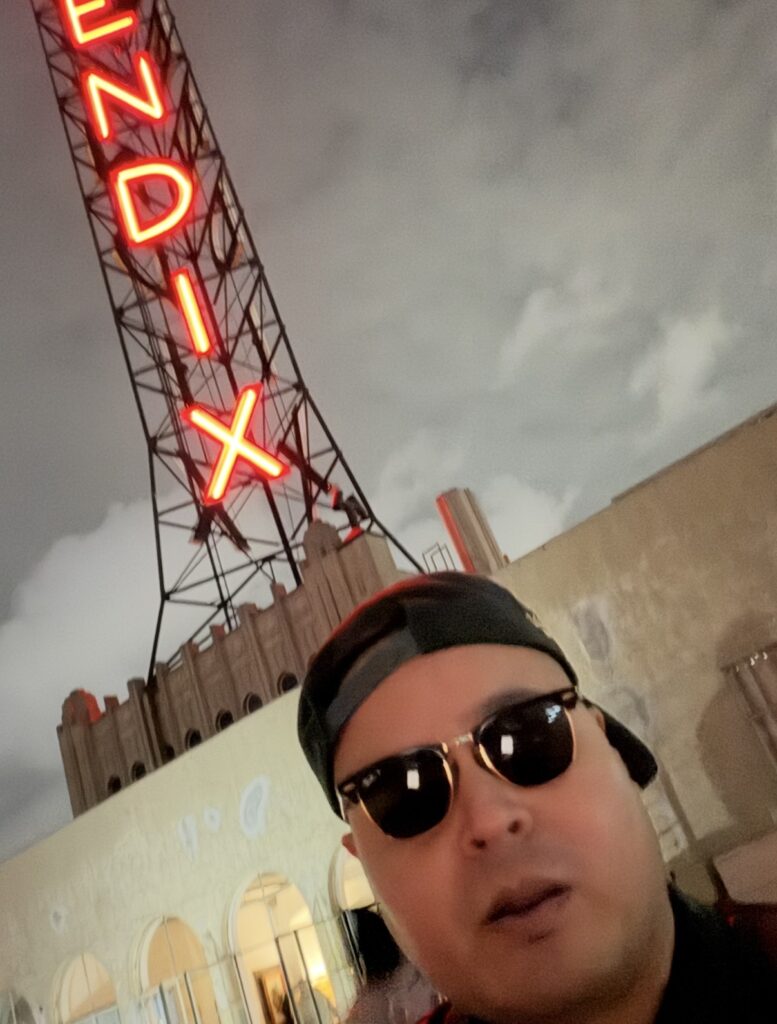
Some artists build careers.
Others build identities.
*God’sPosterChild exists somewhere in between — a character, a voice, and a perspective that doesn’t just create music, but challenges the structure around it.
Born, raised, and made in Hollywood, California, the hip-hop artist doesn’t operate with the goal of fitting into a lane. If anything, the entire approach feels designed to reject one.
When asked who he is beyond the name, the answer doesn’t hesitate:
“I’m Genesis Olivos’ better, more handsome half… funnier, charminger, suave. Single, ladies.”
It lands like a joke.
But it’s also a thesis.
The Origin: Not Built — Triggered
Most artists point to a moment where things “started.”
For *God’sPosterChild, that moment wasn’t strategic — it was reactive.
“At crack rock bottom… around the same time I was assigned my name by the divine.”
That line defines more than an origin story. It introduces the core idea behind the persona: separation.
Not just from other artists — but from expectation itself.
This wasn’t someone gradually stepping into music.
This was someone forced into expression, creating a voice that doesn’t filter itself because it was never built to.
The Sound: Refusal as a Foundation
Ask what makes his music different, and the answer is less about sound — more about intent.
“I don’t give a f— what people want to hear. I’m making music for what I want to hear.”
That mindset shifts everything.
There’s no attempt to reverse-engineer hits.
No effort to align with trends.
No concern for audience expectation.
Instead, the process becomes internal.
If it sounds right to him, it gets made.
If it doesn’t, it doesn’t exist.
That kind of approach doesn’t guarantee success.
But it guarantees identity.
Early Work and Evolution
The current direction of *God’sPosterChild can be heard in tracks like:
- “National Ran$om” — described as a raw snapshot of the artist’s core
- “Hoodwings (The Hollywood Song)” — a record that leans further into narrative and personality
Even within his own circle, there’s debate over which record best represents him.
That tension reflects the larger reality:
The sound is still evolving — but the foundation is already set.
The Misconception: Everything
“What do people get wrong about you?”
“Everything.”
It’s a simple answer — but an important one.
From the name to the tone to the delivery, *God’sPosterChild operates in a space that naturally creates division. Some listeners connect immediately. Others reject it outright.
But that reaction isn’t accidental.
It’s built into the design.
The Duality: Structure vs. Chaos
One of the most revealing aspects of the interview isn’t just what’s said — it’s how it’s said.
Throughout the conversation, the line between *God’sPosterChild and Genesis Olivos becomes visible. One focused on building structure — platforms, systems, CHARGEIT2THAGAME as a larger entity.
The other pushing against it.
“Other companies have rules. We have fun.”
That dynamic creates a tension that defines the brand:
- Builder vs. disruptor
- System vs. freedom
- Control vs. expression
It’s not a contradiction.
It’s the engine.
The Reality: Building From Nothing
“The come up wasn’t easy — and it’s never ending.”
There’s a level of awareness here that shifts the conversation away from music and into something broader.
Building independently isn’t just about creating songs. It’s about:
- Infrastructure
- Consistency
- Patience
- Identity
“There’s a difference between working for a business and building one.”
That distinction matters — especially in a space where many artists rely on systems they don’t control.
The Mindset: No Dependency
“If no one supported me tomorrow, I wouldn’t care. I’d keep making music.”
That statement removes the most common pressure point for artists: validation.
No audience dependency.
No external motivation required.
Just continuation.
And when asked who he outperforms?
“Everyone. The problem is reality hasn’t caught up yet.”
It reads like confidence.
But it’s also a belief system.
Industry Perspective: Create, Don’t Compete
“It really is big enough for everyone… you can do what you want to do.”
In an industry built on scarcity and competition, that perspective stands out.
It reframes the entire game:
- Not fighting for space
- Not waiting for access
- Not asking for permission
Just building.
The Final Form: Already Decided
Ask where all of this leads, and the answer comes quickly:
“Genius. Billionaire. Playboy. Philanthropist.”
It’s exaggerated.
It’s self-aware.
It’s intentional.
But underneath it is something real:
The outcome isn’t being figured out.
It’s already decided.
*God’sPosterChild isn’t an artist trying to be accepted.
He’s building something that doesn’t require acceptance to exist.
The music is still forming.
The audience is still catching up.
But the identity is already locked in.
And in a space where most artists are still searching for one —
that might be the real advantage.
Check out their official website down below:
Follow them on Instagram/Twitter:
@godsposterchild