
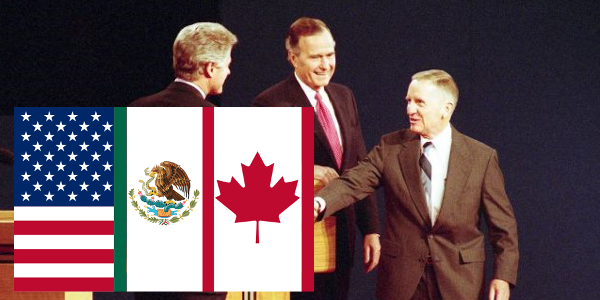
As the world entered the dawn of 1994, a historic event unfolded, shaping the economic landscape of North America – the official inception of the North American Free Trade Agreement (NAFTA) on January 1. This groundbreaking agreement, involving the United States, Canada, and Mexico, marked a significant milestone in regional trade relations.
Origins of NAFTA: Born out of a vision to foster economic cooperation and reduce trade barriers among its member nations, NAFTA aimed to create a free trade zone in North America. Negotiations began in the late 1980s, and the agreement was signed into existence on December 17, 1992.
Economic Integration: One of the primary objectives of NAFTA was to promote economic integration among the participating countries. By eliminating tariffs on various goods and facilitating the movement of goods and services across borders, the agreement sought to boost economic growth and enhance the competitiveness of North American industries on the global stage.
Impact on Trade: Since its implementation, NAFTA has significantly influenced trade patterns in North America. The removal of trade barriers led to a surge in cross-border commerce, as companies seized new opportunities for expansion and collaboration. The agreement stimulated economic growth, contributing to the development of robust supply chains and interconnected markets.
Controversies and Challenges: While NAFTA brought about economic benefits, it also faced criticism and controversies. Some argued that the agreement contributed to job displacement and income inequality in certain sectors. Environmental concerns were also raised, prompting discussions on the need for sustainable practices in the pursuit of economic development.
Evolution into USMCA: In 2020, NAFTA underwent a transformation with the ratification of the United States-Mexico-Canada Agreement (USMCA), which modernized and replaced the original agreement. The USMCA addressed some of the concerns raised over the years and aimed to further enhance North American trade relations in the 21st century.
Legacy of NAFTA: As we reflect on the journey from NAFTA’s inception in 1994 to the evolution into the USMCA, it’s evident that the agreement has played a pivotal role in shaping regional economic dynamics. The legacy of NAFTA lies in its ability to foster collaboration, albeit with challenges, and pave the way for a new era of trade relations in North America.
Conclusion: On this January 1, 2024, we commemorate the lasting impact of NAFTA on the economic history of North America. The agreement not only facilitated trade but also sparked crucial discussions on the balance between economic growth, social considerations, and environmental sustainability. As the region continues to navigate the complexities of global commerce, the legacy of NAFTA remains ingrained in the fabric of North American trade relations. Happy New Years America, Happy New Years to all.