PHIA Sounds Like The Internet Fell In Love Again
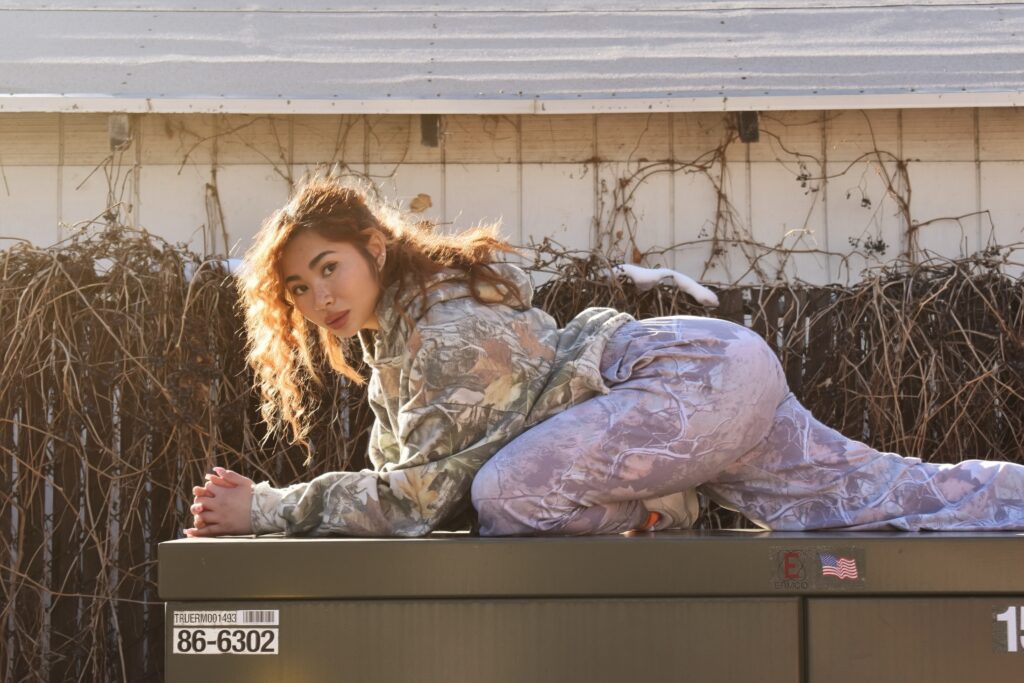
There’s a certain kind of music that doesn’t feel discovered so much as stumbled into accidentally at 2:37 in the morning while your room is dark except for the glow of a laptop screen and whatever emotional disaster you’re currently trying not to think about.
The kind of music that feels attached to internet eras people still quietly mourn.
MySpace profile songs.
Tumblr heartbreak aesthetics.
AIM away messages that somehow felt more honest than real conversations.
That strange late-2000s/early-2010s internet where everybody was sad, romantic, overexposed emotionally, and trying to survive themselves through music.
PHIA sounds like that world reincarnated through futuristic speakers.
Not copied.
Not imitated.
Remembered.
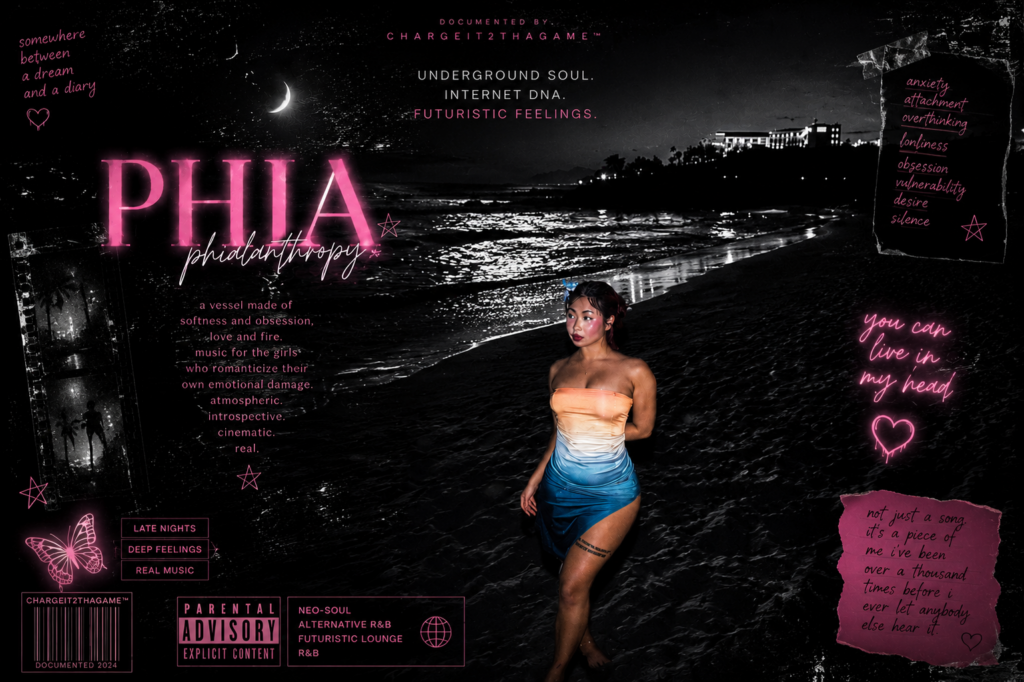
PHIA — known online as @phialanthropy — makes music that feels atmospheric in the truest sense of the word. Not “vibes” in the empty internet way people use the term now. Actual atmosphere. Songs that feel like environments. Emotional weather systems. Dream sequences floating somewhere between neo-soul, alternative R&B, futuristic lounge music, diary entries, and complete emotional collapse.
And what makes it all hit harder is the fact that none of it sounds calculated.
Nothing about PHIA feels algorithm-built.
She doesn’t sound like somebody who sat in a boardroom trying to reverse-engineer virality. She sounds like somebody who physically needed these emotions to leave her body before they consumed her alive.
“The art says everything I don’t,” she explains early in our conversation. “That’s the most honest version of me there is.”
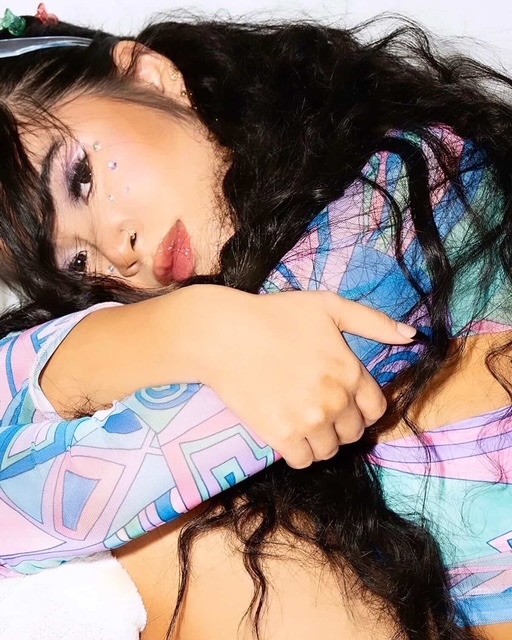
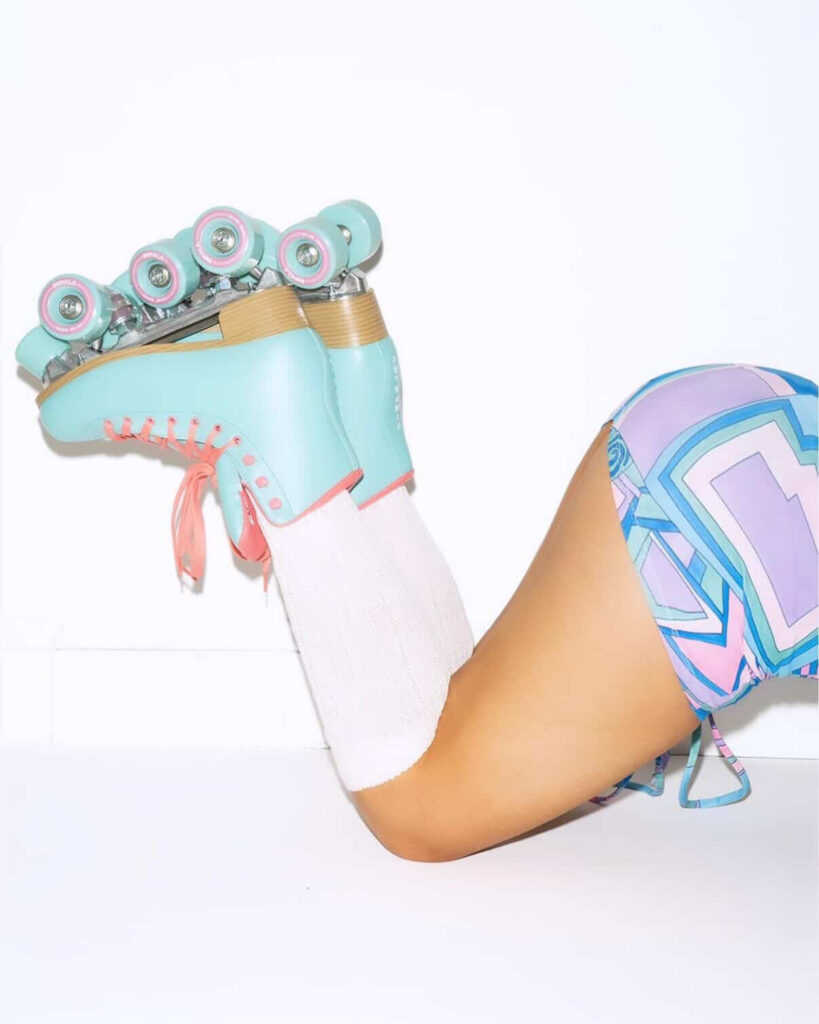

That line alone explains almost everything.
Because PHIA’s music doesn’t feel performed.
It feels leaked.
Like you accidentally found somebody’s private thoughts uploaded to streaming services.
The Sparks, Nevada artist describes herself as “a vessel” made equally from softness, obsession, love, impulsiveness, vulnerability, peace, passion, and fire. The contradiction isn’t accidental. It’s foundational to everything she creates.
“I am everything at once,” she says. “And I make sure to always show it.”
And honestly?
You can hear that immediately.
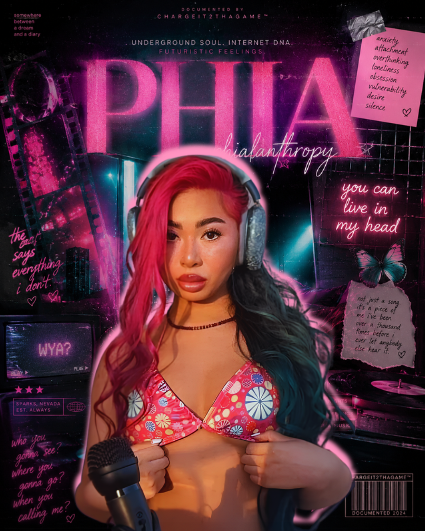
One moment her music feels featherlight and heavenly. The next it spirals into emotional hyperfixation, attachment, overthinking, loneliness, anxiety, lust, frustration, melancholy, and obsession all at once. Her catalog moves the way actual emotions move — inconsistently, irrationally, beautifully.
Not flattened.
Not polished.
Not emotionally sanitized for mass consumption.
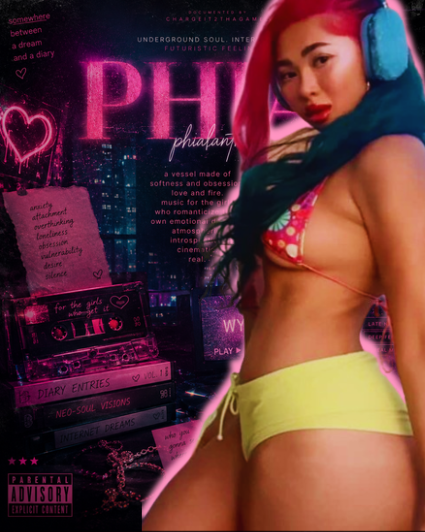
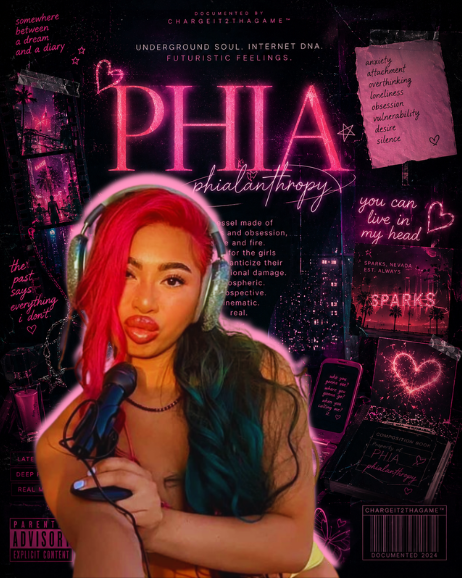
Real.
PHIA first started uploading music around fourteen years old through SoundCloud, but she admits none of it felt intentional the way it does now. Something changed around twenty after finally uploading music to streaming platforms and watching strangers connect to it in real time.
“They knew the lyrics,” she says. “They were putting it in their reels, their stories, their posts. And I remember feeling so genuinely seen.”
That distinction matters heavily to her:
being heard versus being understood.
Because for PHIA, music was never really about attention first. It was release. Translation. Escape. A place for every thought she couldn’t comfortably say out loud to finally go somewhere else instead.
And maybe that’s exactly why the records land the way they do.
Especially “WYA?” — the song she specifically says new listeners should hear first.
Not because it’s the safest choice.
Not because it’s the most commercial.
Because it’s the clearest reflection of who she actually is.
Listening to “WYA?” feels eerily similar to discovering the perfect MySpace profile song back when internet identity still felt emotional instead of performative. The kind of record you’d permanently attach to your page because it somehow articulated exactly how your life felt better than you could yourself.
The DNA of the early internet lives inside this song.
Not nostalgically.
Spiritually.
PHIA’s voice drifts through the production like memory itself — airy, dreamy, emotionally unstable in the best possible way. One second she sounds soft enough to disappear into the instrumental completely. The next she sounds like she’s emotionally unraveling in real time.
“You don’t pick up your phone and I just want you home.”
Simple line.
Devastating feeling.
Because everybody knows exactly what emotional state that belongs to.
The convo in your head at 2AM.
The staring at your phone.
Trying not to text again.
Trying not to care.
Caring anyway.
“What you gonna do, who you gonna see, where you gonna go, when you calling me?”
The questions stack on top of each other until the song almost starts feeling claustrophobic emotionally. Love, anxiety, attachment, melancholy, frustration, obsession — all colliding together before finally detonating during the outro when PHIA snaps: “Oh, so now you want to pick up… tell me where the fuck you were at.”
And suddenly the softness turns sharp.
That emotional layering is what separates the song from generic heartbreak music.
It isn’t just sad.
It isn’t just empowering.
It’s honest.
And honesty seems to be the core of PHIA’s entire creative identity.
“I want people to feel less alone,” she says.
That desire bleeds through nearly everything she creates because she understands how isolating internal thoughts become when nobody says them out loud, her music constantly circles themes most people quietly carry every day: anxiety, emotional attachment, overthinking, vulnerability, loneliness, obsession, silence, self-doubt.
And maybe that’s why the records feel so intimate.
They don’t sound like they were made for crowds first.
They sound like they were made for one person alone in the dark trying to survive their own thoughts.
Sonically, PHIA exists in a fascinating lane because she refuses to fully settle into one identity. Some records drift heavily into dreamy neo-soul and atmospheric R&B. Others flirt with experimental pop structures. Others feel closer to cinematic soundscapes than traditional songwriting entirely.
At times the influence of Jhené Aiko becomes obvious — especially in the softness of her emotional delivery and spiritual vulnerability. Other moments feel spiritually adjacent to SZA or a less industry-polished version of Doja Cat. There are traces of Billie Eilish floating through the atmospheric production choices too, except PHIA’s music often feels more psychedelic emotionally.
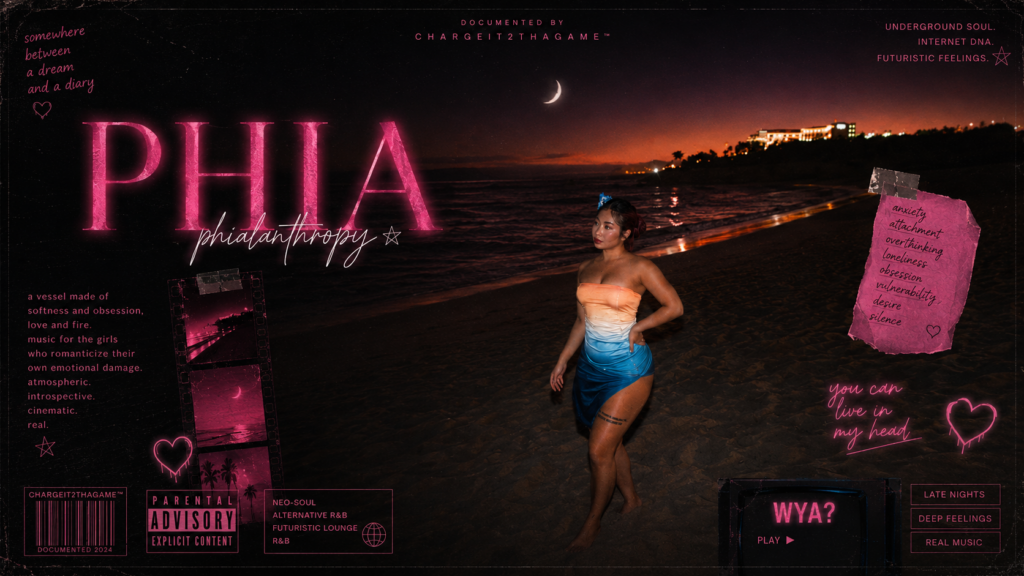
And weirdly enough, one of the strongest comparisons might actually be Jon Bellion.
The layering.
The experimentation.
The emotional architecture.
The cinematic composition.
Because PHIA’s records constantly feel larger than simple genre labels. The songs feel designed like emotional environments more than traditional structures.
“CATWOMAN” especially feels like a criminals’ slow jam for nights they aren’t out breaking laws. Heavy and featherlight at the same time. Seductive without trying too hard. The hook — “you can live in my head” — drifts through the production while softer airy vocals wrap around it like smoke curling through neon light.
Meanwhile “DO4LUV/GANGSTA” feels almost extraterrestrial emotionally. PHIA’s voice becomes less of a delivery system and more of an instrument itself, climbing higher through the production while melodies dissolve into each other. Listening to it feels less like hearing a song and more like being serenaded in outer space.
Every piece of unreleased material shows signs of an artist discovering instincts in real time.
“EGYPTIAN DUNES” leans almost entirely into sonic hypnosis — cinematic vocalization more concerned with emotional feeling than conventional structure.
“DOWN” is a snippet with more emotion than full tracks.
Even the features and covers carry weight.
“THE PLAYBOOK” by SEI ft. PHIA, carries production reminiscent of House of Balloons-era darkness.
A cover of FRANK OCEAN’S “WHITE FERRARI” reaches almost absurd levels of emotional composition where the notes and vocal layering feel like final brush strokes completing a massive painting.
And then there’s “DIFFERENT CLOTH” — a feature on a PAEKA song, the clearest sign that PHIA’s ceiling as an artist is significantly higher than people initially expect…or give her credit for. Here she isn’t just singing beautifully. She’s talking her shit. Reflective. Introspective. Honest. The flow stays gentle while the writing itself carries emotional weight.
PHIA shines on covers such as “THINKIN'” by JEAN DEAUX and on “SLOWDOWN” by BOBBY VALENTINO.
And all of this is happening through BandLab.

Fucking. BANDLAB.
“The fact that my music sounds the way it does coming out of that app is honestly a miracle,” she laughs.
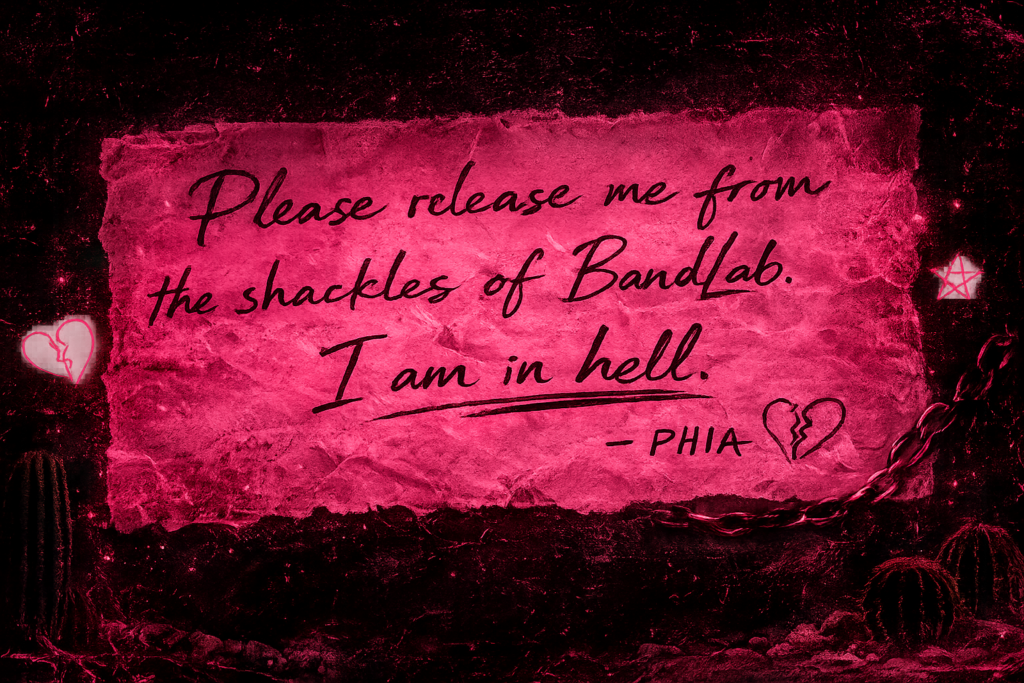
The quote lands because behind the humor is something bigger: resourcefulness.
A reminder that some artists don’t emerge from million-dollar studios. Some emerge from bedrooms. From headphones. From obsession. From replaying the same vocal chain until sunrise because the feeling still isn’t translating correctly yet.
And PHIA is obsessive.
Painfully so.
She describes herself as hypercritical to the point of exhaustion — replaying projects endlessly, changing tiny details repeatedly before finally allowing herself to release anything.
“It’s never just a song,” she says. “It’s a piece of me I’ve been over a thousand times before I ever let anybody else hear it.”
That perfectionism has also become one of her biggest battles. Consistency remains difficult. Real life interrupts creativity. Energy disappears. Adulthood demands things from artists that inspiration alone can’t always overpower.
“Just being a human being in this day and age takes everything out of you sometimes,” she says.
But the music never fully leaves.
“It’s always there waiting.”
That line says more than most artists communicate in entire albums.

WHAT PHIA

Because underneath all the humor, vulnerability, internet fluency, and emotional chaos, PHIA ultimately sounds like somebody in an ongoing relationship with creation itself. Not virality. Not clout. Creation.
Virality chases attention.
Creation chases truth.
PHIA seems significantly more interested in the second one.
That mindset becomes even clearer when discussing support — or the absence of it.
When asked what almost made her quit, her answer comes instantly:
“Silence.”
Not hate.
Not criticism.
Not failure.
Silence.
Posting something deeply personal only to feel ignored by the world around you. Watching vulnerability disappear into algorithms without reaction.
“At a certain point it starts to feel embarrassing,” she admits before laughing through the frustration.
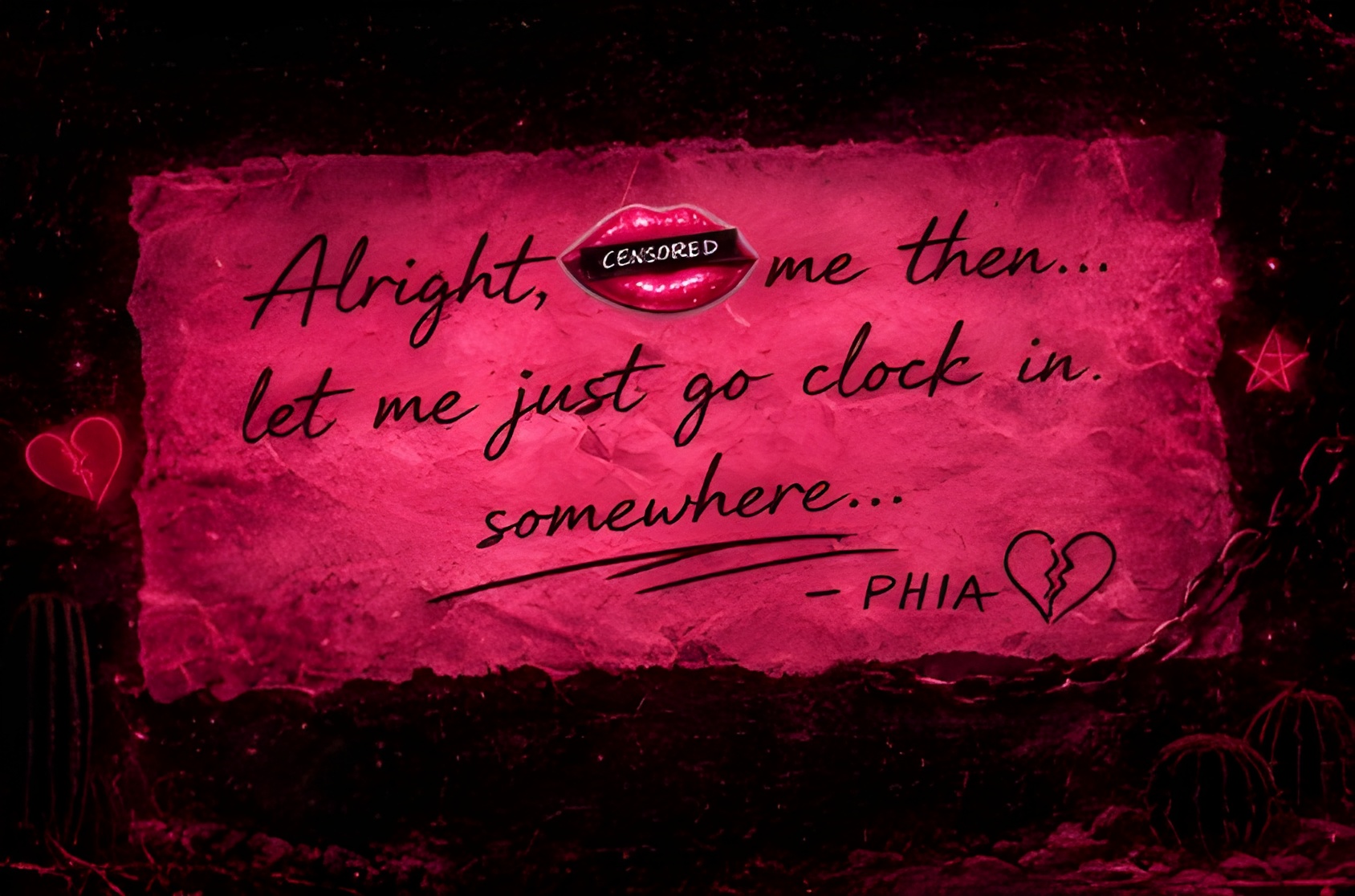
But the joke only half-hides the exhaustion underneath it.
Because there’s something uniquely painful about vulnerability meeting indifference.
Still, even then, she couldn’t stop creating.
“Supporting me was never their job,” she says. “My purpose is to create.”
And honestly?
That perspective might be exactly why she’ll survive this industry.
Because despite all the softness, there’s steel underneath PHIA too.
It appears suddenly throughout the interview in flashes:
“I’m going to prove everyone wrong.”
“You can’t take me out the game that easy, bitch.”
“She is everything you’re scared of.”
Moments where vulnerability hardens into ambition.
And that ambition feels earned.
Because PHIA doesn’t sound like somebody trying to become an artist anymore.
She sounds like somebody already living as one whether the world catches up immediately or not.
That difference matters.
Especially now.
Because in an era oversaturated with disposable singles, copy-paste aesthetics, TikTok-first songwriting, and algorithm-manufactured personalities pretending to have emotional depth they never actually earned, PHIA feels increasingly rare:
an artist with atmosphere.

Not just songs.
Not just visuals.
Not just branding.
Atmosphere.
The type that lingers after the music stops playing.
The type that makes people replay records not because they fully understand them yet — but because they’re trying to return to whatever emotional place the song just dragged them into.
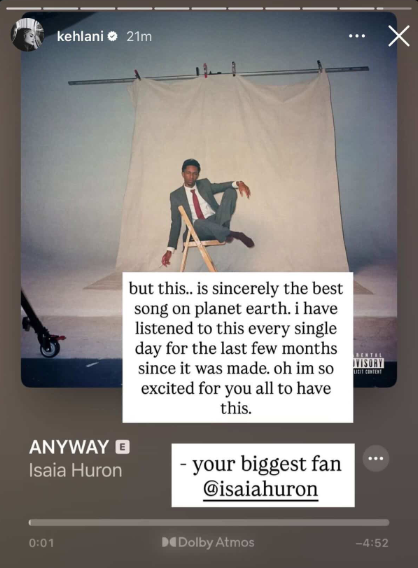
And maybe the clearest proof of that is already happening quietly in real time. PHIA’s voice recently appeared during the haunting outro of “ANYWAY” by Isaia Huron — the same record Kehlani publicly called “the best song on planet earth.” It’s the kind of detail most people overlook until years later when they realize an artist they now can’t escape was already floating through records they loved before they even knew her name. That’s the thing about presence. Real presence doesn’t always scream first. Sometimes it lingers in the background long enough to become unforgettable.
And listening to PHIA right now feels exactly like standing too close to something that hasn’t fully erupted yet.
Because she hasn’t fully arrived.
Not even close.
This still feels like the beginning of somebody discovering the full range of what they’re capable of in real time — which honestly makes the music even more exciting. The instincts are already there. The atmosphere is already there. The emotional identity is already there.
And artists with instincts this sharp eventually become impossible to ignore.
The scary part isn’t who PHIA is right now.
It’s who she becomes once the rest of the world finally catches up to what’s already been living inside her this entire time.
Stream PHIA’s music and step into the atmosphere for yourself below.
Follow PHIA everywhere and stay connected to everything coming next:
Instagram:
@phialanthropy
TikTok:
@guavanoodles
Listen on:
Spotify
Apple Music
SoundCloud
YouTube
DOCUMENTED BY CHARGEIT2THAGAME